
Sleep Disorders: Symptoms, Causes, Types & Effective Treatment Options
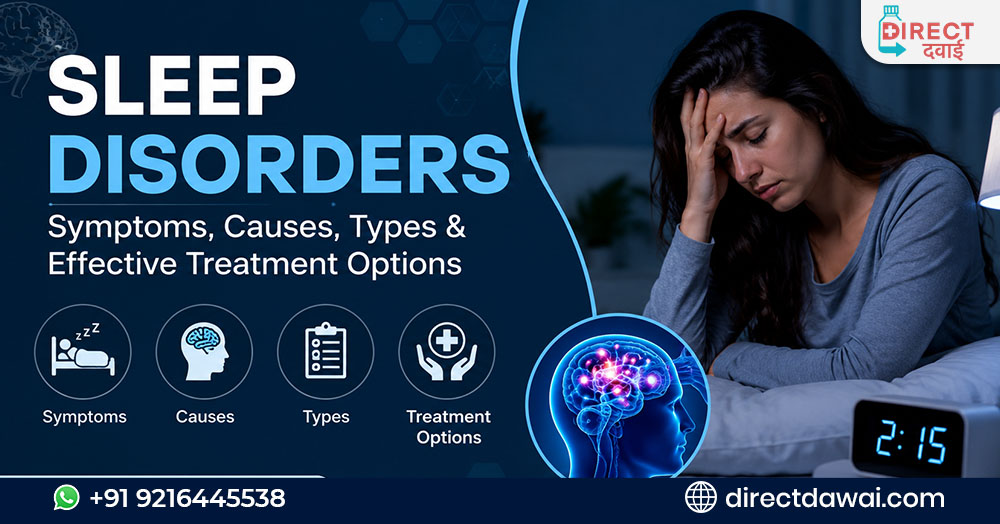
What Are Sleep Disorders?
Think about the last time you had a poor night's sleep. Maybe you've had those nights. You stayed up too late working. Drank one too many coffees. Felt stressed about something at work or in your relationship. The next day was rough. But after a good night's sleep, everything bounced back. Right?
But sleep disorders are different. They're not about one bad night. They're conditions that mess with your sleep regularly- the quality, timing, or duration. Your body and mind just can't get the rest they truly need.
Some people can't fall asleep no matter how tired they are. Others wake up over and over throughout the night, asking, “Why can't I sleep?” Some actually stop breathing while sleeping due to the condition called sleep apnea. And then there are those who sleep 8 hours but wake up feeling like they got 2.
The worst part is that when these disorders go untreated, they start chipping away at your life.
-
Your energy crashes
-
Focus disappears
-
Mood swings show up uninvited
-
Work starts suffering
-
Relationships get harder to manage
That's why recognising their signs early is important.
When Is a Sleep Problem More Than Just a Bad Night?
Now, you might be asking, “How do I know if I have a sleep disorder?” Fair question. We've all had those nights where sleep just won't come. You toss. You turn. You check the clock every 20 minutes. It happens.
But there's a difference between a bad night and something more serious. A bad night is temporary, while a sleep disorder is persistent. In fact, many of the symptoms of sleep disorders in adults show up repeatedly and begin affecting everyday life. So, if you are experiencing the following things, it's not just a bad night anymore-
-
You take more than 30 minutes to fall asleep regularly. Not once in a while. And that happens almost every night.
-
You wake up multiple times during the night and struggle to get back to sleep.
-
You wake up too early and can't fall back asleep, even when you're exhausted.
-
You feel tired all day, or experience excessive daytime sleepiness, no matter how many hours you spent in bed.
-
Your partner says you snore loudly or stop breathing during sleep.
-
You feel irritable, anxious, or depressed, and you can't figure out why.
-
You rely on caffeine just to get through the day, and it's not working anymore.
-
Your concentration and memory are slipping. It’s like you forget things, and often feel foggy.
-
You've tried everything, but nothing helps.
The Symptoms Your Body Tries to Warn You About
One of the biggest misconceptions people hold is that the symptoms of sleep disorders in adults only show up at night. But that’s not the whole truth. In fact, in many cases, the first warning signs appear during the day. You may start forgetting even simple things that normally wouldn't slip your mind. You may find it difficult to keep your focus during the meeting, or to keep yourself alert, and even go for multiple cups of coffee.
This happens because sleep runs deeper than that. It shapes how your brain works, how your body recovers, how you handle stress, and how you feel emotionally. Even aspects of your gut health. But remember, the exact symptoms can vary depending on your condition, and some signs can even tend to show up again and again.
Also read- How to Improve Gut Health Naturally: A Complete Guide
So, with the help of the table below, let’s see which symptoms you might experience and at which time.
|
Physical Symptoms |
Daytime Symptoms |
Emotional Symptoms |
|
Difficult to fall asleep |
Feeling sleepiness excessively |
Irritability |
|
Frequent waking up at night |
Poor level of concentration |
Anxiety |
|
Loud snoring |
Fatigue |
Mood swings |
|
Restless or disrupted sleep |
Less productivity than needed |
High level of stress |
|
Headaches in the morning time |
Hard to remember things |
Overwhelming feeling |
|
Dry mouth when you wake up |
Less alertness |
Frustration |
Common Types of Sleep Disorders and Their Warning Signs
Now, you might be wondering, are there different types of sleep disorders or all the same? The honest answer is no, not all sleep disorders look the same. Some make it difficult to fall asleep. Others may interrupt your sleep throughout the night. And some can even affect your body's internal clock, making it hard enough for you to sleep at the times you actually need to.
So, let’s see each one in a bit more detail-
-
Insomnia
Insomnia is found to be a very common sleep disorder across the world. It happens when a person is already having difficulty falling asleep, staying asleep, or getting restful sleep despite having the proper time to sleep. In this situation, you may experience the following insomnia symptoms-
-
It takes too much time for you to fall asleep
-
You wake up frequently during the night
-
You wake up too early and are not able to return to sleep
-
Feel tired all the time despite spending enough time in bed
-
Having difficulty concentrating during the day
But here is the fact- some people may experience it during their stressful times, and it gets better after some time. While for others, it may become a regular kind of problem that affects their day-to-day life.
-
Sleep Apnea
You can define it as a condition where the person’s breathing stops and starts during sleep. And the worst part is that many people don't even realise it's happening until a partner points it out. In this, the common symptoms could be-
-
Loud, persistent snoring
-
Gasping or choking during sleep
-
Morning headaches
-
Dry mouth upon waking
-
Excessive daytime sleepiness
-
Feeling unrefreshed after sleep
Because sleep apnea repeatedly interrupts sleep throughout the night, the body never gets the deep, restorative rest it actually needs.
-
Restless Legs Syndrome (RLS)
It’s the condition where your body urges you to move your legs, especially during evening time or when you are trying to sleep. People often describe this kind of sensation as:
-
Tingling
-
Crawling
-
Pulling
-
Aching
They say that by moving their legs, they feel a bit relieved, but the symptoms often return once they try to relax again.
-
Narcolepsy
So, Narcolepsy is a neurological sleep disorder that affects your brain’s ability to better control your sleep and wakefulness. And the most common symptom which you will more likely feel is overwhelming daytime sleepiness that can occur even after a full night's sleep. Other signs that you would notice include-
-
Sudden sleep attacks
-
Keeping yourself awake during your routine activities
-
Vivid dream-like experiences while falling asleep or waking up
Now, though, it is less common than insomnia or sleep apnea, narcolepsy can have a major impact on your daily life.
-
Circadian Rhythm Sleep Disorders
Your body follows an internal clock that helps find out when you feel awake and when you feel sleepy. But when circadian rhythm sleep disorders occur, this internal clock becomes out of sync with your daily schedule. Under this, you may experience symptoms like
-
Shift work sleep disorder
-
Delayed sleep phase syndrome
-
Jet lag-related sleep disruption
In fact, with these conditions, you may struggle to fall asleep or wake up at socially expected times, even when you're genuinely tired.
-
Parasomnias
Parasomnias are the kind of unusual behaviours that you may experience during sleep. And if you have this condition, you may experience
-
Sleepwalking
-
Night terrors
-
Talking during sleep
-
Acting out dreams
But while some parasomnias are relatively harmless, others may need you to go for a medical evaluation, especially if they lead to injuries or frequent sleep disruption.
Quick Comparison- Common Sleep Disorders at a Glance
|
Sleep Disorder |
Main Symptom |
Common Warning Sign |
|
Insomnia |
Difficulty sleeping |
Lying awake for long durations |
|
Sleep Apnea |
Interrupted breathing |
Loud snoring |
|
Restless Legs Syndrome |
Urge to move the legs |
Symptoms get worse at night |
|
Narcolepsy |
Sudden sleep episodes |
Extreme daytime sleepiness |
|
Circadian Rhythm Sleep Disorders |
Disrupted sleep timing |
Difficulty sleeping at normal hours |
|
Parasomnias |
Unusual sleep behaviours |
Sleepwalking or night terrors |
Sleep Apnea vs Insomnia- Why They're Often Confused
So, among all the above sleep disorders we’ve discussed, these two are often confused- sleep apnea and insomnia. But they are different, and the following table shows you how-
|
Sleep Apnea |
Insomnia |
|
Breathing repeatedly stops and starts during sleep |
Difficulty falling asleep or staying asleep |
|
Often involves loud snoring |
May happen without snoring |
|
You may not realise awakenings are happening |
You will usually be aware of sleep difficulties |
|
Commonly linked to breathing issues |
Commonly linked to stress, anxiety, or lifestyle factors |
|
Can lead to severe daytime fatigue |
Can lead to tiredness and poor concentration |
That’s how these two are very different. But there is one thing that you need to remember- both conditions require different approaches and involve different diagnosis processes and sleep disorder treatment.
Why Can't I Sleep? Common Causes of Sleep Disorders
But if you've ever found yourself lying awake at 2 a.m., staring at the ceiling and wondering, "Why can't I sleep?", in this section you will likely find the answer.
Sleep disorders rarely have a single cause. They can be triggered by anything like stress, lifestyle, or your medical condition or history. Let’s discuss them in a bit more detail-
-
Stress, Anxiety, and Mental Health
Think about how difficult it is to fall asleep when your mind won't stop replaying conversations, worrying about deadlines, or imagining worst-case scenarios. Then at this point, your body may be physically tired, but your brain is still running a marathon. And this is one of the biggest reasons people struggle with sleep. In fact, anxiety and chronic stress are strongly linked to several common sleep disorders, particularly insomnia.
-
Lifestyle Habits That Disrupt Sleep
Sometimes the problem is not at all a disorder, but your lifestyle habits. The examples could be like-
-
Using screens late into the night
-
Drinking caffeine too close to bedtime
-
Irregular sleep schedules
-
Working night shifts
-
Lack of physical activity
-
Excessive alcohol consumption
Day by day, these habits can interfere with your natural sleep-wake cycle and make quality sleep much harder to achieve for you.
-
Medical Conditions
Some health conditions can also increase the risk of developing sleep disorders, especially in adults, like-
-
Chronic pain conditions
-
Respiratory disorders
-
Hormonal changes
-
Neurological conditions
-
Obesity
-
Certain medications
And this is one of the reasons why persistent sleep problems shouldn't be ignored. Because sometimes poor sleep is the symptom, not the root cause.
-
Your Internal Body Clock May Be Out of Sync
Your body operates on a natural 24-hour rhythm known as the circadian rhythm. But when that rhythm becomes disrupted, sleep often follows. This is where circadian rhythm sleep disorders come into the picture. They commonly affect the following people-
-
Shift workers
-
Frequent travellers
-
People with highly irregular schedules
You may feel sleepy when you're supposed to be awake and wide awake when you're supposed to be sleeping. Slowly, that mismatch can create serious sleep difficulties.
Sleep Disorder Treatment: What Actually Helps?
Now, if you've made it this far, you're probably thinking, "Okay, I understand the symptoms and causes. But what actually helps?"And sleep disorder therapy might work best for you? The answer lies in the type of sleep disorder you are suffering from.
Like if you have mild symptoms of insomnia, you can cure them through a simple lifestyle and sleep habits-
-
Going to sleep and waking at regular hours
-
Limiting screen time before bedtime
-
Keeping yourself away from caffeine late in the day
-
Creating a quiet, comfortable sleep environment
-
Exercising regularly, but not too close to bedtime
-
Reducing alcohol consumption, especially in the evening
But if you have been diagnosed with severe insomnia, the doctor may offer you Cognitive Behavioural Therapy (CBT). Here, you won’t be given pills but a thorough treatment starting from your thoughts and habits to your behaviour. You learn healthier sleep patterns through this and get yourself cured.
Then, if it is sleep apnea, your treatment may include:
-
CPAP (Continuous Positive Airway Pressure) therapy
-
Oral appliances designed to improve airflow
-
Weight management strategies
-
In some cases, surgery too
And sometimes, sleep problems are only a symptom of something else. You may be suffering from
-
Anxiety
-
Depression
-
Chronic pain
-
Hormonal imbalances
-
Neurological disorders
Also read: Ayurvedic Medicine for Anxiety: Everything You Need to Know
When Should You See a Doctor?
Till now, you have learned almost everything from why sleep disorders occur to what the possible treatments could be. But now, the main questions, when exactly should you see a doctor? Here are the possible situations when you should go to a doctor-
-
Struggling to fall asleep or stay asleep on a regular basis.
-
Experiencing excessive daytime sleepiness even after spending enough time in bed.
-
Waking up feeling tired almost every morning.
-
Your partner notices you snoring loudly, gasping, or actually stopping breathing during sleep.
-
Sleepwalking, night terrors, acting out your dreams. These aren't normal.
-
You've already tried improving your sleep habits, but nothing seems to be helping.
Conclusion
In the end, we can say that your body can function without many things for a while. But quality sleep isn't one of them. That's why sleep disorders deserve attention. They're not simply about feeling tired. They affect how you think. How you work. How you feel. How you show up every single day.
But most sleep problems are treatable. With the right diagnosis, treatment, and lifestyle changes, things can turn around. So if you've been telling yourself it's 'normal,' maybe it's time to rethink that.
Because your health should not be compromised in any way. Moreover, if you are looking for effective and genuine sleeping medicines or sleep supplements, you can check out Direct Dawai. The trusted online pharmacy in Jaipur with the fastest delivery at your doorstep.
FAQs
-
What are the five major sleep disorders?
Insomnia, sleep apnea, narcolepsy, circadian rhythm disorders, and parasomnias. Each one messes with sleep differently and has different symptoms. Analyse them and accordingly go with the right treatment.
-
How to fix sleep disorders naturally?
-
Stick to a regular sleep schedule
-
Cut caffeine intake
-
Ditch screens before bed
-
Manage stress levels
Still, if you struggle after weeks, consider seeing a doctor.
-
Can anxiety cause sleep disorders?
Yes, indeed, anxiety is considered to be one of the major causes of sleep disorders. Racing thoughts, excessive worry, and ongoing stress are what lead to disruptions in sleep and sometimes late-night awakening.
-
What Happens If Sleep Disorders Go Untreated?
When left untreated, sleep disorders can affect much more than your sleep. You may feel constant fatigue, poor concentration, mood swings, lower levels of productivity, and a high risk of certain health problems for a long duration.
-
How Are Sleep Disorders Diagnosed?
Doctors usually follow a simple procedure as they review
-
Your symptoms
-
Sleep habits
-
Medical history
And sometimes they even consider a sleep study on you to check on your breathing, brain activity, and lifestyle habits.
-
Why Are Sleep Disorders More Common in Adults?
It is because when we become adults, we often experience stress, tight work schedules, and poor lifestyle balance. And not to be left behind, certain medical conditions, medications, and age factors also lead to poor sleeping habits.
Disclaimer: This blog is for educational purposes only and does not include any personal advice. So, kindly do not consider it a replacement for professional medical advice, and make your choice based on your own preferences and a consultation with a certified doctor.
Sources
https://my.clevelandclinic.org/health/diseases/11429-sleep-disorders
https://medlineplus.gov/sleepdisorders.html
https://www.ncbi.nlm.nih.gov/books/NBK560720/
https://www.mayoclinic.org/diseases-conditions/sleep-disorders/symptoms-causes/syc-20354018



Leave your comment
Note: HTML is not translated!