
10 Ways to Improve Gut Health Naturally with Indian Foods
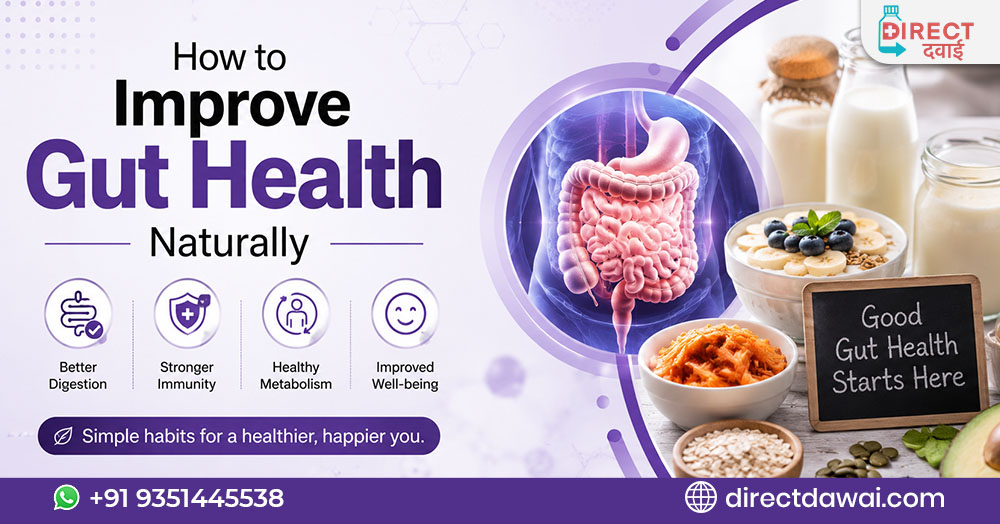
That’s why when you understand how to improve gut health, you won’t just be able to fix your stomach. You can upgrade your mood, your skin, and your immunity. In this blog, we'll cover evidence-based ways to support your gut, Indian foods you can easily add to your meals, foods and habits worth limiting, probiotics, common gut-health myths, and when digestive symptoms need medical attention.
What Is Gut Health?
In layman's terms, gut health means how well your digestive system is working and how healthy the trillions of tiny microorganisms living inside your intestines are. Altogether, they are called the gut microbiome.
Consider your gut microbiome like a diverse garden. It contains many different microorganisms, and maintaining a healthy balance and diversity is more useful than simply thinking in terms of "good bacteria" versus "bad bacteria." They help break down the food you eat, absorb nutrients, strengthen your immune system, and even send signals to your brain. But when the bad bacteria start bossing around the good bacteria, it's like a tiny tummy war, and your body pays the price. You might feel common digestive symptoms like-
-
Puffed up like a tight balloon after eating
-
Stuck and unable to go to the bathroom
-
Like your food is just sitting heavy like a rock
-
Super tired, even if you slept well
-
Just an overall "yuck" or a constant ache in your belly
But these symptoms can have many different causes and do not automatically mean that your gut microbiome is "unhealthy."
Why Gut Health Is Important
If your gut is just a food pipe, scientifically called the gastrointestinal (GI) tract, why does it matter so much? It's because about 70-80% of your immune system, the army that fights off your colds and fevers, lives right in your belly. A connection that Harvard Health's own gut research also confirms.
Plus, your gut is the gatekeeper that lets nutrients into your body. You could be eating the healthiest, most expensive organic food in the world, but if your gut is dying, your body can't absorb those nutrients. You are just flushing your money and your health down the toilet. A weak gut means a weak you.
5 Common Signs of Digestive Problems
Now, do you know that your gut actually talks to you every day? But surprisingly, most of us ignore the warnings. So, if you regularly feel any of these five things, you are struggling with the signs of poor gut health.
-
Puffed up like a tight balloon after eating- A little gas after a heavy rajma chawal meal is normal. But if your stomach swells up like a balloon after every meal, your bad bacteria are likely throwing a party and fermenting your food instead of digesting it.
-
Stuck and unable to go to the bathroom- If you are spending way too much time waiting on the toilet, or not going at all, your digestive system might have stalled out.
-
Like your food is just sitting heavy like a rock- That icky feeling that your lunch is still sitting in your throat hours later means your stomach acid and digestive juices are running low.
-
Super tired, even if you slept well- If you sleep 8 hours but still wake up exhausted, your broken gut isn't absorbing the energy from your food.
-
Just an overall "yuck" or a constant ache in your belly- That constant, dull, heavy feeling is your gut's way of saying, "Please stop feeding me junk and give me a break."
However, these symptoms are common and can have many causes, including diet, food intolerance, stress, infections, and digestive conditions. Persistent or severe symptoms should not simply be blamed on the gut microbiome.
Simple Natural Ways to Improve Your Gut Health
Now, before we talk about what to eat, we have to fix how you live. These 10 natural ways to improve gut health are daily habits that act like water and sunlight for your gut garden. They don't cost a single rupee, but they work like magic.
Let’s understand them briefly-
-
Chew Your Food Like a Cow
Digestion doesn't involve the role of your stomach at first, the role of your mouth comes first. When you gobble down your food in two minutes, your stomach has to do all the heavy lifting. That’s why chew every bite 20 to 30 times until it turns into liquid. Your tummy will thank you.
-
Ditch the Ice Water
Drinking freezing cold water with your meal is like throwing ice on a burning stove. It helps stop your digestive fire in its tracks. Drink warm water, or sip on warm jeera (cumin) water instead to keep things moving smoothly.
-
Drink Enough Water
Water helps move fiber through your gut, keeps your digestive lining protected, and prevents constipation, which itself throws off your gut bacteria balance. That’s why try to drink roughly 8 to 10 glasses a day or more if you're active or it's hot out.
-
Give Your Tummy a 12-Hour Break
Your gut needs time to clean itself, just like you need sleep to recharge. So, stop eating after dinner, and don't eat breakfast until 12 hours later. This gives the good bacteria enough time to sweep the intestines clean without having to digest new food.
-
Take a 10-Minute Walk After Eating
Don't flop onto the sofa right after a meal. A short, easy walk after lunch and dinner helps push the food down the digestive road much faster, stopping that heavy, bloated feeling.
-
Calm Down Before You Eat
When you are super stressed, your body turns off digestion to deal with the "emergency." You cannot heal a gut with a stressed mind. That’s why take 5 deep breaths before your first bite to tell your body, "We are safe, and it's time to eat.”
-
Get Your Beauty Sleep
Your gut bacteria have a bedtime, too. When you stay up late scrolling on your phone, your gut microbiome gets confused and grumpy. So, aim for 7 to 8 hours of sleep so the good bacteria can do their nighttime repair work.
-
Load Up on Fiber and Prebiotic Foods
Fiber is genuinely the single most researched way to support good gut bacteria, and most people simply don't get enough of it. So here, aim for roughly 21 to 38 grams a day, found in foods like whole grains, legumes, leafy greens, and fruits with the skin on. But if your usual thali has dal, sabzi, and a fruit, you're likely closer to this number than you think.
Then there are probiotics, which are the good bacteria. They are used by beneficial microorganisms and can support their growth or activity. Foods such as onions, garlic, legumes, oats, and bananas can contribute prebiotic compounds to your diet.
Also Read- Best Medicines of Cold, Cough and Fever- You Should Know
-
Stop Being a Germaphobe
Trying to kill 99.9% of germs everywhere with harsh chemical cleaners actually wipes out the good bacteria in your home, too. A little bit of dirt is good for your immune system. Let it do its job.
-
Eat With the Seasons
Your gut bacteria also get affected by the change of weather. That’s why seasonal foods can be a practical way to add variety to your diet. But you don't need to eat specific foods according to the season to "feed" your gut. Focus instead on fruits, vegetables, whole grains like bajra roti in winter, pulses, nuts, and other minimally processed foods.
-
Dump the Fake Sugar
Those zero-calorie sugar substitutes might save you a few calories, but they could confuse and damage your gut bacteria. If you need something sweet, stick to a little bit of natural jaggery (gud) or honey. It will give your gut what it requires without any harm.
But here, you don't need to completely ban every packaged food. Just remember that regularly eating large amounts of highly processed foods and added sugar can make it harder to maintain a fibre-rich, nutrient-dense diet. So, choose whole or minimally processed foods more often.
NOTE: Don't just focus on one "superfood." A varied diet can also give your gut microbiome different types of fibre and plant compounds. So, try including different vegetables, fruits, pulses, whole grains, nuts and seeds throughout the week.
Prebiotics vs Probiotics: What's the Difference?
After you understand the superfoods, what is gut health and why it is important, let’s understand this- What exactly is the difference between prebiotics and probiotics?
So, prebiotics are substances, often certain types of dietary fibre, that are used by beneficial microorganisms in the gut. While probiotics are specific live microorganisms that may provide health benefits when consumed in adequate amounts.
Think of it simply like this-
Prebiotics = food for certain gut microbes
Probiotics = live microorganisms
But here, remember that fermented food ≠ automatically probiotic. Some fermented foods contain live microorganisms as well, while others may lose them during processing or heating.
Best Indian Foods to Improve Your Gut Health
To improve your gut health, you might be thinking that you need to buy expensive imported kombucha or fancy kimchi. But you can find some of the best Indian foods for gut health in your own kitchen. Some of them could be like-
|
The Indian Food |
Its Gut Superpower |
How It Fixes Your Gut |
|
Homemade Dahi (Curd) |
The Probiotic King |
• Drops live good bacteria into your tummy • Fights off the bad bacteria • (Must be homemade! Store-bought has sugar & dead bacteria) |
|
Idli & Dosa |
Fermented Fuel |
• Fermenting breaks down tough food • Super easy to digest • Feeds the good bacteria while you eat |
|
Homemade Achaar |
Spicy Probiotic Bomb |
• Swimming in healthy bacteria • Brings in new good bug families • (Store-bought uses vinegar that kills bacteria, but it should be homemade only) |
|
Chaach (Buttermilk) |
The Cooling Gut Wash |
• Cools down stomach heat • Delivers live good bacteria • Washes away acidity |
|
Green Bananas |
Prebiotic Rocket Fuel |
• Acts like premium fertilizer • Feeds good bacteria so they multiply • Helps you go to the bathroom smoothly |
|
Onion & Garlic |
Good Bacteria Fertilizer |
• Packed with special fiber (inulin) • Acts like "Miracle-Grow" for good bacteria • Helps them grow big and strong |
|
Kanji |
The Deep-Clean Drink |
• Brings in diverse new bacteria • Deep-cleans the gut system • Kicks out the bad bacteria |
Spicy NoteDon't Forget the Spice Squad Indian cooking uses spices that are like medicine for a sick gut. So, keep these pointers in mind-
|
Foods & Habits That Could Harm Your Gut
Although you know what to eat, it is still not enough. So here are some foods and habits that can still harm your gut.
|
The Gut Killer |
The Danger |
How It Destroys Your Gut |
|
Refined Seed Oils (Sunflower, Canola, Saffola) |
Inflammatory Fuel |
• Causes massive inflammation in the gut lining • Damages the protective wall of your intestines • Swap for cold-pressed mustard oil, coconut oil, or ghee |
|
Deep-Fried Street Food (Samosas, Pakoras) |
Reused Oil Poison |
• Reused oil acts like poison to your gut • Kills good bacteria instantly • Makes digestion super sluggish and heavy |
|
Excess Sugar (Mithai, Packaged Drinks) |
Bad Bacteria Food |
• Favorite food of bad bacteria • Makes bad bacteria multiply and take over • Starves out the good bacteria |
|
Frequent Antibiotics |
The Nuclear Bomb |
• Wipes out both good and bad bacteria • Leaves your gut city empty and vulnerable. • Makes your immune system very weak temporarily. |
|
Late-Night Dinners |
The Night Shift |
• Forces your gut to work while you sleep • Steals the 12-hour repair time your gut needs • Causes morning acid reflux and sluggishness |
|
Artificial Sweeteners |
The Fake Sugar Trap |
• Confuses and damages your gut bacteria • Can make your body intolerant to glucose • Use small amounts of natural jaggery or honey instead |
|
Alcohol Consumption |
Toxic Wipeout |
• Directly kills good bacteria on contact • Tears your protective gut lining • Feeds harmful yeast and bad bacteria |
|
*The Golden Rule You can't plant seeds in a toxic garden. Cut out these gut-killers first, so the good Indian foods you eat can actually heal you, not harm you. |
Do You Need a Gut Detox?
Well, no special gut detox is required for most healthy people. Your digestive system already has natural processes for digesting food and removing waste. And there is also no good evidence that colon cleansing or "detox" products improve the gut microbiome. So, instead of detox drinks, laxatives or restrictive cleanses, focus on fibre-rich foods, adequate fluids, regular movement, sleep and a varied diet.
Quick Daily Gut Health Checklist
Now, if you want a simple way to keep your gut happy without overthinking it, screenshot this checklist and check it off every single day. Do these 6 simple things, and your tummy will thank you.
Warm Water Only- Did I skip the ice-cold water today? (Cold water puts out your digestive fire! Stick to warm or room-temperature water.)
Chewed to Liquid- Did I chew every bite 20-30 times? (Your stomach doesn't have teeth. Chewing makes food super easy to digest.)
Ate 1 Fermented Food- Did I have my homemade dahi, idli, or achaar today? (This drops live, good bacteria directly into your gut.)
Fed the Good Bacteria- Did I eat a prebiotic food like a banana, onion, or garlic? (This gives the good bacteria their favorite food so they grow strong.)
12-Hour Rest- Did I leave a full 12-hour gap between my dinner and breakfast? (Your gut needs this break to sweep the intestines clean and repair the lining.)
Post-Meal Walk- Did I walk for just 10 minutes after lunch or dinner? (This acts like a gentle massage to push food smoothly through your system.)
|
Pro-tip You don't have to be perfect on day one. Just start by checking off one or two boxes tomorrow, and watch how much better your tummy feels. |
When Should You See a Doctor?
Most digestive discomfort is manageable with diet and lifestyle changes. But some signs deserve a doctor's attention, not another home remedy like:
-
Blood in your stool, or stools that look black or tarry
-
Unexplained weight loss
-
Persistent abdominal pain that doesn't improve
-
Diarrhea or constipation lasting more than a couple of weeks
-
Symptoms that don't improve despite consistent lifestyle changes
These can sometimes point to something beyond everyday gut imbalance, and catching it early makes a real difference. When in doubt, get it checked rather than waiting it out. Meanwhile, if you are someone with ongoing digestive symptoms, avoid relying only on "gut health" supplements or restrictive diets. Conditions such as IBS, inflammatory bowel disease, coeliac disease, food intolerances, and other digestive disorders may require proper evaluation.
Conclusion
So, in the end, your gut is the foundation of your entire body. When it's broken, everything else, like your mood, your skin, your energy, falls apart. But you don’t need to burn cash on imported pills or fancy powders.
By simply returning to our Indian roots, like eating homemade dahi, adding hing and jeera to our meals, and chewing our food, is enough to rebuild our gut microbiome. So, start with just one or two habits today, be consistent, and let your gut heal. Then, over time, you will see a noticeable difference in yourself.
Need help finding digestive-health products or medicines? Direct Dawai makes it easier to access medicines and health essentials online. It is Jaipur’s most trusted online pharmacy with a proven track record of delivering care to your doorstep. However, if you experience persistent or concerning digestive symptoms, discuss them with a qualified healthcare professional rather than self-treating.
Disclaimer: This blog is for educational purposes only and does not include any personal advice. So, kindly do not consider it a replacement for professional medical advice, and make your choice as per your own preferences and certified doctor consultation.
FAQs
-
How can I improve my gut health fast?
The fastest way is to stop eating processed sugar, drink warm water instead of cold, and chew every single bite of your food properly. These three steps would help you reduce bloating almost immediately.
-
What is the 7-day gut reset?
A 7-day gut reset means removing all junk food, sugar, and refined oils for a full week and eating only simple, cooked, gut-friendly foods like
-
Khichdi
-
Steamed vegetables,
-
Fermented foods like idli or homemade curd to give your gut a break.
-
What is the 3-3-3 rule diet?
The 3-3-3 rule is a simple lifestyle habit. Like, eat 3 balanced meals a day, leave at least 3 hours between each meal so your gut can rest. And finish your last meal at least 3 hours before going to sleep.
-
What heals the gut fastest?
Homemade bone broth (or vegetarian rasam or yakhni) and completely removing refined sugar from your diet. These things give your gut lining the raw materials it needs to repair itself without getting irritated.
-
How to detox your gut?
Your gut detoxes itself naturally if you let it. Still, the best way to "detox" is to fast for 12 hours overnight, drink at least a glass of warm water in the morning, and eat a high-fiber diet (dal, sabzi, whole grains) to sweep the intestines clean naturally.
-
What naturally kills bad bacteria in the gut?
You don't need to kill them, you need to starve them. Bad bacteria feed on sugar and refined flour. By cutting sugar and eating prebiotic foods (garlic, onions, bananas), you feed the good bacteria, which naturally outcompete and starve out the bad bacteria.
-
How long does it take to improve gut health?
In general, bloating eases in 3 days, good bacteria grow in 3 weeks, and your gut lining fully heals in 3-6 months.
-
Can probiotic supplements help in improving gut health?
Yes, they send backup good bacteria, especially after antibiotics. But always take them after a meal so stomach acid doesn’t kill them.
-
Can fermented foods improve gut health?
Fermented foods such as yoghurt and some traditionally fermented vegetables may contain live microorganisms, but not every fermented food is a probiotic. Choose a varied diet and check labels where applicable for live cultures.
-
What foods are high in fibre for gut health?
Good fibre sources include dal, beans, chickpeas, rajma, whole grains, oats, fruits, vegetables, nuts and seeds. But increase fibre gradually and drink enough fluids to help prevent bloating or constipation.
Sources
https://www.healthline.com/health/gut-health#gut-microbiome

Leave your comment
Note: HTML is not translated!