
Vitamin E Benefits for Hair – Growth, Thickness, Side Effects
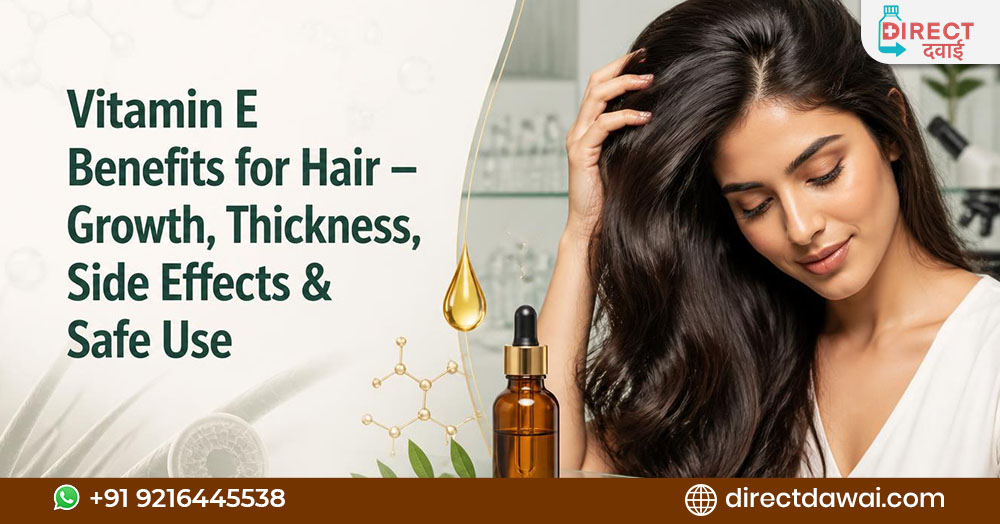
What Is Vitamin E, And Why Is It In Every Hair Product?
Your scalp, just like the rest of your skin, deals with daily oxidative stress from pollution, sun, and even styling heat. Vitamin E is a fat-soluble antioxidant that helps neutralize that stress at the cellular level, which is exactly why it shows up in nearly every hair oil, serum, and shampoo you'll find on a shelf. In fact, Dermatology research has also linked balding scalps to lower antioxidant levels and more serious oxidative damage compared to healthy ones. So, the theory behind adding vitamin E to your hair routine isn't random marketing; it's rooted in genuine scalp biology.
But whether that theory fully translates into visible, real-world hair growth is a separate question, and that's exactly what we're breaking down next.
The Real Benefits of Vitamin E for Hair
Beyond the growth debate, vitamin E does offer a few genuine, well-supported benefits for your scalp and hair overall, like:
-
Reduces oxidative stress on the scalp — this is the most well-established benefit, and it's the mechanism behind everything else on this list. Less oxidative damage tends to be a healthier environment for hair follicles to work in.
-
Improves scalp circulation — when massaged in as an oil, the physical act of massage combined with vitamin E's properties can support blood flow to hair follicles, which may help deliver nutrients more effectively.
-
Locks in moisture — being oil-soluble, it helps fight dryness on the scalp and along hair strands, which is especially useful if you’re experiencing flakiness or brittle ends.
-
Adds shine and smoothness — this one's more cosmetic than biological, but a light coating genuinely does reduce frizz and give hair a smoother, glossier look.
-
Supports a calmer, less irritated scalp — its anti-inflammatory properties can help soothe scalp discomfort, particularly for people dealing with mild dandruff or sensitivity.
Apart from vitamin E’s benefit for hair, it does support your overall skin health too, and if you want to know how, you can read our complete guide on vitamin E benefits for skin.
But here, worth being upfront about what's not on this list: it doesn't reverse existing hair loss, and it doesn't work as a fast fix. These are supportive, cumulative benefits, not dramatic transformations, which is exactly why the growth claim needs the more careful, study-based explanation that follows.
How To Get More Vitamin E: Diet vs. Supplements
Capsules and oils aren't the only way to get more vitamin E into your system, and honestly, food is where most people should start. Like,
Through your diet
Vitamin E shows up naturally in a handful of everyday foods, mainly leafy greens, nuts and seeds, vegetable oils, and fortified cereals. So, if you're looking to boost your intake without reaching for a supplement, here's roughly how much you'd get from common options:
-
1 tablespoon of wheat germ oil — around 20.3 mg
-
1 oz of dry roasted sunflower seeds — around 7.4 mg
-
1 oz of dry roasted almonds — around 6.8 mg
-
2 tablespoons of peanut butter — around 2.9 mg
-
Half a cup of boiled spinach — around 1.9 mg
-
Half a cup of boiled broccoli — around 1.2 mg
Because getting your vitamin E this way is generally considered the safer route, since it's nearly impossible to overdo it through food alone the way you can with supplements.
Through supplements
Meanwhile, if diet alone isn't cutting it, vitamin E supplements are easy to find at most pharmacies. But here are a couple of things worth knowing before you start, like always taking them with food. It’s because vitamin E is fat-soluble and needs some dietary fat to absorb properly. And here's something that surprises most people: supplement-form vitamin E is synthetic, and your body actually needs roughly 50% more of it to get the same benefit as the natural form you'd get from food.
So, because of that gap, and because too much vitamin E can genuinely cause harm at high doses, it's worth checking with a doctor before starting a supplement rather than just picking one off the shelf.
Does Vitamin E Actually Help Hair Growth?
The simple answer to this is yes, but only in a specific, well-defined way, and it's not the way most people assume. It’s because Vitamin E supplementation has shown a genuine increase in hair count in one controlled human study, but it hasn't been shown to significantly improve hair thickness in that same study.
Here's the full picture- the most-cited evidence comes from a 2010 trial published in Tropical Life Sciences Research, where 38 volunteers with hair loss were split into two groups. Twenty-one took 100mg of mixed tocotrienols (a potent form of vitamin E) daily for 8 months, while seventeen took a placebo. By the end, the tocotrienol group showed a 34.5% increase in hair count, compared to a 0.1% decrease in the placebo group.
But in this whole picture, this was what was never mentioned- this wasn't hair oil, and it wasn't the everyday tocopherol capsule most people already have at home. It was a specific, concentrated tocotrienol supplement, taken orally, for eight months straight. And while hair count went up, the actual weight of hair strands (a proxy for thickness) barely changed in either group.
So the honest takeaway is that vitamin E may genuinely support new hair growth over time, largely by reducing oxidative stress on the scalp, but it hasn't been shown to make your existing strands visibly thicker on its own. And that is exactly why vitamin E for hair growth and thickness needs a more honest, two-part answer rather than a single yes.
How To Use Vitamin E Capsule For Hair Growth And Thickness
Now, if you want to try it, here's how to use a vitamin E capsule for hair growth and thickness properly, and how much and how often:
-
Wash your hair and let your scalp dry completely before application.
-
Grab a fresh capsule and puncture it with a clean needle to release the oil.
-
Don't apply it straight; instead, mix it with a carrier like coconut or almond oil first.
-
Massage it into your scalp gently for a few minutes to get the blood flowing.
-
Leave it in for at least an hour, or overnight if your scalp handles it well.
-
Wash it out with a mild shampoo like Pantene Pro-V Hairfall Control Shampoo
As for how many times to use vitamin E capsules for hair, twice a week is generally enough. This is because using it daily doesn't speed up results and increases the chance of a greasy scalp or irritation. Then, if you're wondering how much vitamin E for hair growth works best orally instead, one capsule a day, alongside food, is the standard approach. Still, it's worth confirming with a doctor rather than self-prescribing it long-term.
Along with that, you can also try other hair masks rich in vitamin E, like you can go with the following ingredients and blend them finely-
-
One banana
-
One avocado
-
One teaspoon coconut oil
-
One teaspoon avocado oil
-
One teaspoon honey
Vitamin E Oil vs. Capsule vs. Hair Serum, Which Actually Works Best
This genuinely depends on what you're trying to do. Here's a quick side-by-side to make this choice easier for you:
|
Format |
How It's Used |
Best For |
Watch Out For |
|
Vitamin E oil (bottled or from a punctured capsule) |
Diluted with a carrier oil like coconut or almond oil, massaged into the scalp |
Scalp massages, improving circulation, oxidative-stress reduction |
Thick and concentrated on its own but never apply undiluted |
|
Vitamin E capsule (oral) |
Swallowed daily, usually with food |
Internal antioxidant support, overall hair and immunity health |
Doesn't reach your scalp topically at all, because it's a separate approach, not a substitute for oil or serum |
|
Vitamin E hair serum |
Applied directly to scalp or lengths, no dilution needed |
Everyday use, layering with other hair-care products, lighter feel |
Usually lower concentration than raw oil, so results build more gradually |
If your main goal is scalp health and reducing oxidative stress, a light serum or a properly diluted oil used consistently will usually be more practical day-to-day than a heavy, undiluted capsule applied directly. But if you're after internal, whole-body support alongside your topical routine, that's where an oral capsule like Evion 400 comes in, not as a replacement for topical care, but as a complement to it.
Vitamin E Capsule For Hair Side Effects: What To Watch For
Vitamin E capsule for hair side effects are generally mild, but a few things are worth knowing before you start, like:
-
Applying it directly, undiluted, can leave your scalp feeling greasy or clog hair follicles over time.
-
Some people experience scalp irritation or an allergic reaction to topical tocopherol.
-
Taking high oral doses for a long period without medical guidance can increase bleeding risk, especially if you're on blood-thinning medication.
-
Always patch test a small area of your scalp before your first full application.
Important note: If your scalp already has an infection, active dandruff, or open sores, hold off on applying vitamin E oil until it's addressed. Because sealing an irritated or infected scalp under an oil-based product isn't a great combination.
What Else Can You Pair With Vitamin E For Better Hair Results?
Vitamin E works better as part of a routine than as a standalone fix. So, here are some other options that you can pair with it-
-
Coconut oil- rich in lauric acid, it penetrates the hair shaft better than most oils, reducing protein loss from daily wear. Mixing it with vitamin E oil before a scalp massage is one of the most common, genuinely effective combinations, and it's the same pairing many traditional Indian hair-oiling routines already use.
-
Castor oil- thicker and stickier than most oils, but it's often credited with improving scalp circulation thanks to its ricinoleic acid content. In fact, a small amount blended with vitamin E can make application easier without losing castor oil's benefits.
-
Vitamin C- while more commonly discussed for skin, vitamin C plays a similar regenerative role here because it helps recycle spent vitamin E back into an active form. That means the two work better together than either does alone, particularly when taken orally alongside a vitamin E supplement.
-
Omega-3 fatty acids- found in foods like walnuts, flaxseeds, and fish, these support scalp health from within and complement the topical antioxidant effect of vitamin E, rather than duplicating it.
-
Biotin, also called vitamin B7- this one works via a completely different pathway, supporting keratin production for hair strength. It provides structural support and oxidative protection when paired with vitamin E.
Meanwhile, you can also try products like
-
Head & Shoulders Smooth & Silky 2-in-1 Shampoo, depending on your hair situation and type.
-
Ustraa Hair Growth Vitalizer if you are a man.
Also, to go along with your proper hair care, you can also check our complete guide on home remedies for hair growth
Takeaway
So, in the end, we can conclude that vitamin E genuinely has a place in hair care, backed by real, though limited research showing it can support hair count over time through its antioxidant effect on the scalp. But it won't magically thicken your hair on its own. Think of it as one piece of a bigger routine, not a fix that works by itself. If you use it the right way, diluted, patch-tested, and paired sensibly with other habits, it can be a simple, low-cost addition worth trying. Meanwhile, if you're building out your hair-care shelf with genuine vitamin E products or supplements, you can also explore our full hair care range.
Disclaimer: This blog is meant to inform, not replace a proper conversation with a doctor or dermatologist about your specific situation. If you're dealing with persistent hair loss, scalp irritation, or an active scalp condition, please consult a dermatologist rather than relying on the information provided in this blog.
FAQs
-
Can Evion 400 stop hair fall?
Honestly, no, and that's not really a fair expectation to place on it in the first place. Evion 400 can be helpful to support scalp health as part of your antioxidant intake, but it’s not clinically proven to prevent hair fall on its own, especially if the cause is genetic, hormonal, or stress-related.
-
What are the big 3 for thinning hair?
Dermatologists often talk about "the big 3" when it comes to pattern hair loss- minoxidil, finasteride, and ketoconazole shampoo. These are the options with the strongest evidence behind them. In fact, these are genuinely effective for many people, but finasteride especially needs a doctor's prescription and isn't something to self-start.
-
Which is better, biotin or vitamin E?
Neither is objectively "better," since they work differently. Biotin, for example, helps create keratin, the structural protein that forms your hair. Think of vitamin E as your scalp's antioxidant. It steps in to protect against everyday oxidative stress. Still, most people benefit more from using both than picking one over the other.
-
Is it okay to apply vitamin E straight onto my hair?
You can, but it's better diluted with a carrier oil first. It’s because undiluted vitamin E is thick and concentrated, which can leave your scalp greasy or clog follicles over time.
-
Can vitamin E regrow hair?
Not exactly. Research shows it may help boost hair count in people already experiencing hair loss, possibly by lowering oxidative stress on the scalp. But there's no solid evidence it regrows hair that's been lost for a long time or reverses more advanced balding.
-
Why does Gen Z balding so fast?
It's less about actually balding faster and more about noticing it earlier, thanks to social media, filtered selfies, and constant scalp scrutiny. That said, genuine contributing factors do exist: higher stress levels, poor sleep, nutrient-poor diets, and increased styling or heat use are all playing a real role too.
-
What should you not mix with vitamin E?
Mainly blood-thinning medications like warfarin or aspirin, since the combination can raise bleeding risk. And if you're already on any prescription medication, it's worth checking with a doctor before adding vitamin E supplements into the mix.
-
Where not to use vitamin E oil?
Avoid applying it to broken skin, active scalp infections, or areas with an existing rash, since sealing that under an oil-based product can make things worse instead of better.
-
What fruits are high in vitamin E?
Avocado leads the list among fruits, followed by kiwi, mango, and blackberries, though none of them come close to nuts and seeds in actual vitamin E content.
-
How many times should I use vitamin E capsules for hair in a week?
Twice a week is generally enough for topical use. It’s because daily application doesn't speed up results and just increases the chance of a greasy, product-heavy scalp.
-
Can vitamin E reverse grey hair?
No, there's no reliable evidence for this. Greying is mostly tied to genetics and natural aging, not a vitamin deficiency, so no supplement is likely to reverse it.
-
Does vitamin E darken or thicken individual hair strands?
Not directly. It’s because the research shows an increase in hair count, not a measurable change in how thick or dark each strand actually is.
-
Is vitamin E good for leukoplakia?
Actually, yes, to some extent. It’s because research shows vitamin E, especially combined with other antioxidants like lycopene, can help shrink oral leukoplakia lesions. But results are mixed across studies, so it's not a guaranteed fix, and this needs a doctor's supervision, not self-treatment, since leukoplakia can sometimes be precancerous too.
Source
https://pubmed.ncbi.nlm.nih.gov/24575202/
https://www.jcdr.net/articles/PDF/12175/36050_CE%5BRa1%5D_F(SHU)_PF1(AJ_AP)_PFA(MJ_AJ_AP)_PN(AP).pdf
https://traya.health/blogs/traya-talk/female-hair-loss-statistics

Leave your comment
Note: HTML is not translated!