
Types of Bandages: Uses, Benefits & First Aid Guide
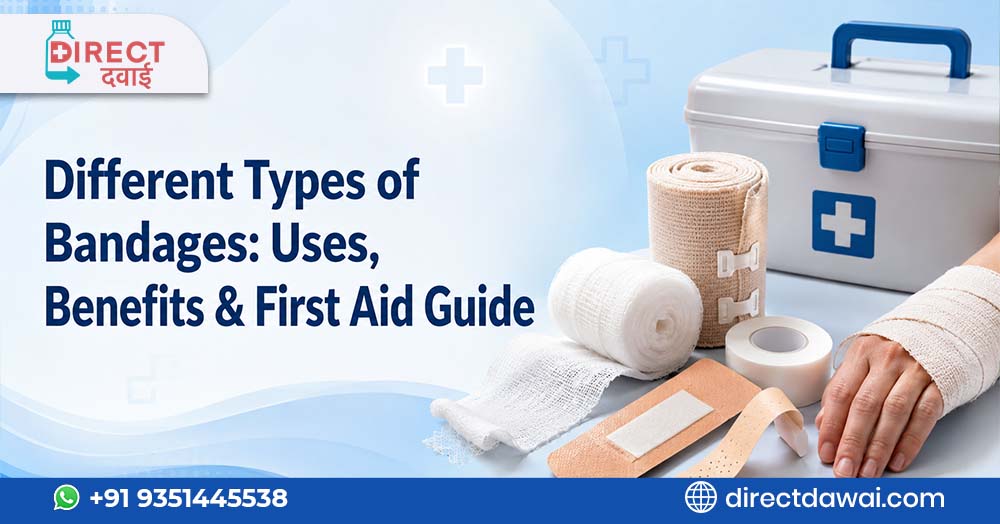
Quick Guide: Which Bandage Is Used for What?
If you are looking for a quick answer, this table can help you understand which option is commonly used for different first-aid needs:
|
Injury or need |
Commonly used option |
Main purpose |
|
Small cuts and scratches |
Adhesive bandage/plaster |
Protects a minor wound |
|
Holding a dressing in place |
Roller/conforming bandage |
Secures the dressing |
|
Sprains and strains |
Crepe or elastic bandage |
Provides support and, when appropriate, compression |
|
Finger or toe support |
Tubular bandage |
Supports the area or secures a dressing |
|
Arm or shoulder support |
Triangular bandage |
Can be used as a sling |
|
Swelling |
Appropriate compression/support bandage |
Helps manage swelling when suitable |
|
Fracture or suspected broken bone |
Splint/cast under professional care |
Immobilises the injured area |
|
Small suitable skin cracks |
Liquid bandage |
Forms a protective covering |
But remember, the best bandage is not determined by the name alone. The injury, body part, wound condition, and amount of support required all matter. And that’s where we need to know where bandages can be applied.
Where Can Bandages Be Applied?
Bandages can be used on almost any part of the body, as long as there is an injury or wound that needs protection or support. Some of the most common areas include:
-
Limbs — arms, legs, wrists, and ankles often need bandages for support and to limit movement while healing.
-
Fingers and toes — small cuts, sprains, or nail injuries are commonly covered with smaller bandages sized for these areas.
-
Head and face — these areas need extra care, and special bandaging techniques are used to avoid pressure on sensitive spots.
-
Torso — wounds on the chest, back, or abdomen are usually dressed first and then secured with a wider bandage or wrap.
Because if you know where a bandage is needed, it can help you pick the right size and type before you even start wrapping.
What Is a Bandage?

A bandage is a piece of material used to support an injured body part, secure a dressing, apply pressure, or restrict movement when needed. It is commonly used in first aid, hospitals, sports injuries, and home care. They help keep the affected area clean and safe from dirt and bacteria, which supports faster healing. But here, it is also useful to understand that a bandage and a dressing are not always the same thing. A dressing generally goes directly over a wound, while a bandage may be used to hold the dressing in place or provide support.
It’s like different bandages are made from different materials and designs depending on their purpose. For example, some are soft and flexible, while others are elastic, self-adhering, tubular, triangular, or designed to become rigid as part of fracture immobilisation.
Bandage vs Dressing: What's the Difference?

A dressing is generally placed directly over a wound. While a bandage is often used to hold that dressing in place or provide support or compression. Here’s the simple comparison for better understanding-
|
Dressing |
Bandage |
|
Usually placed directly over a wound |
May hold a dressing in place |
|
Can absorb blood or wound fluid |
Can provide support or compression |
|
Helps protect the wound |
Can help limit movement or secure the dressing |
For example, a sterile gauze pad placed over a cut is a dressing. While a roller bandage wrapped around it to keep the dressing secure is the bandage.
Why Proper Bandaging Matters
Using the right bandage correctly can make first aid more effective. Depending on the type, a bandage can:
-
Hold a dressing securely in place
-
Provide support to an injured muscle or joint
-
Apply appropriate pressure over a dressing
-
Help limit swelling or unwanted movement
-
Provide temporary support while medical care is arranged
However, a bandage should not be treated as a cure. This is because the purpose is to protect, support, or manage the injury appropriately while it heals or until further medical care is available. Incorrect bandaging, especially wrapping something too tightly, can restrict circulation and cause pain, tingling, numbness, or changes in skin colour.
Different Types of Bandages and Their Uses

There are several types of bandages used in first aid, wound care, sports injuries, and medical settings. But the right option depends on what the bandage needs to do. Like,
1. Roller Bandages
Roller bandages are long strips of cloth rolled into a cylinder shape. They are commonly used to hold dressings in place and provide light support to injured areas.
Uses of Roller Bandages
-
Covering wounds and cuts
-
Holding gauze or dressings in place
-
Supporting mild injuries
-
Wrapping arms, legs, or fingers
Benefits of Roller Bandages
-
Easy to apply
-
Flexible and comfortable
-
Available in different sizes
-
Useful for daily first aid needs
Popular Roller Bandages
|
Bandage Name |
Nos. |
Price |
Common Use |
|
BANDAGE 5 CMX2.5 |
10PC |
₹150 |
Holding dressings on small wounds |
|
BANDAGE 7 CMX2.5 |
10PC |
₹210 |
General first aid wrapping |
|
BANDAGE 9 CMX2.5 |
10PC |
₹270 |
Medium wound dressing support |
|
BANDAGE 14 CMX2.5 |
10PC |
₹336 |
Wrapping larger injured areas |
|
4.6 |
₹1400 |
Daily wound care and dressing support |
2. Crepe Bandages (Elastic Bandages)
Crepe bandages are stretchable bandages mainly used for compression and support. They are widely used for sports injuries and swelling.
Uses of Crepe Bandages
-
Sprains and strains
-
Muscle injuries
-
Swollen joints
-
Post-injury compression support
Benefits of Crepe Bandages
-
Reduces swelling
-
Improves support and stability
-
Helps reduce pain during movement
-
Reusable and washable
Popular Crepe Bandages
|
Bandage Name |
Nos. |
Price |
Common Use |
|
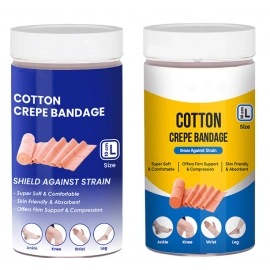
CREPE BANDAGE 6 CM |
1PC |
₹150 |
Mild sprains, wrist support, swelling reduction |
|
1 PACK |
₹200 |
Joint compression and muscle support |
|
|
1PC |
₹250 |
Sports injuries, ankle and knee support |
|
|
6 INCH |
₹299 |
Support for larger body areas like thighs and knees |
3. Gauze Bandages
Gauze bandages are lightweight and breathable bandages commonly used for open wounds. They help absorb blood and keep the wound protected.
Uses of Gauze Bandages
-
Covering minor open wounds
-
Absorbing blood or wound fluid
-
Protecting a cleaned wound
-
Providing a layer beneath another bandage
Benefits of Gauze Bandages
-
Soft and breathable
-
Absorbs fluids effectively
-
Helps reduce infection risk
-
Gentle on sensitive skin
*Important note: Gauze placed directly over a wound is generally a dressing. That’s why calling every gauze product a “gauze bandage” can create confusion between dressings and securing bandages. So, try not to consider it that way.
4. Triangular Bandages
Triangular bandages are versatile first aid bandages often used during emergencies. They can be folded and used in multiple ways. And its most familiar use is creating a sling to support an injured arm, but it can also provide temporary support and help secure dressings in certain situations.
Uses of Triangular Bandages
-
Creating arm slings
-
Supporting fractured bones
-
Temporary injury support
-
Emergency first aid care
Benefits of Triangular Bandages
-
Multipurpose use
-
Easy to carry in first aid kits
-
Quick support during emergencies
-
Simple to tie and adjust
But a suspected fracture or dislocation still requires medical assessment, and a triangular bandage should not be considered a treatment for the underlying injury.
5. Adhesive Bandages (Band-Aids/Strips)
Adhesive bandages, often called band-aids or plasters, combine a small wound pad with an adhesive strip. They are designed mainly for minor cuts, scratches, abrasions, and blisters.
Uses of Adhesive Bandages
-
Small cuts and wounds
-
Minor burns and abrasions
-
Protecting blisters
-
Everyday first aid care
Benefits of Adhesive Bandages
-
Quick and easy to use
-
Protects wounds from dirt and bacteria
-
Comfortable for daily activities
-
Available in waterproof options
Popular Bandaids/Strips
|
Bandage Name |
Nos. |
Price |
Common Use |
|
50PC |
₹125 |
Small cuts, scratches, and minor wounds |
|
|
1PC |
₹2.50 |
Everyday wound protection |
|
|
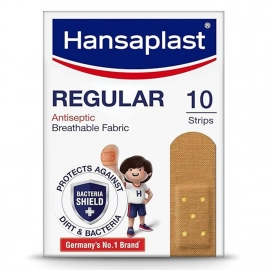
10 STRIPS |
₹100 |
Larger cuts and abrasions |
|
|
4PC |
₹40 |
Protection from corns and foot pressure |
6. Tubular Bandages
Tubular bandages are stretchable tube-shaped bandages used to support joints and hold dressings in place. They are commonly used on fingers, elbows, knees, and ankles and are available in different sizes for different body areas.
Uses of Tubular Bandages
-
Supporting fingers and toes
-
Securing dressings
-
Supporting joints
-
Providing light, even compression when appropriate
Benefits of Tubular Bandages
-
Easy to wear and remove
-
Provides even pressure
-
Comfortable for long-term use
-
Allows better movement compared to regular wraps
7. Compression Bandages
Compression bandages are specially designed elastic bandages used to improve blood circulation and control swelling. They are commonly used after injuries or in certain vein-related conditions. However, compression is not appropriate for every injury or every person. The amount of compression required depends on the condition, and medical advice may be needed for conditions such as venous ulcers or significant circulation problems.
Uses of Compression Bandages
-
Swelling control
-
Sports injuries
-
Varicose vein support
-
Venous ulcer management
Benefits of Compression Bandages
-
Helps improve blood flow
-
Reduces swelling and discomfort
-
Supports faster recovery
-
Provides firm muscle support
Important Safety Point
A compression bandage should not cause numbness, tingling, increasing pain, or changes in colour or temperature of the fingers or toes. If you feel this, these can be signs that circulation is being affected and the bandage needs attention.
8. Cohesive Bandages
Cohesive bandages are designed to stick to themselves rather than directly to the skin. This makes them useful when you want a bandage that stays in place without relying on adhesive tape.
Uses of Cohesive Bandages
-
Holding dressings in place
-
Supporting joints
-
Supporting soft-tissue injuries
-
Providing light compression when appropriate
Benefits of Cohesive Bandages
-
Stays securely in place without sticking directly to the skin
-
Easy to apply and adjust when needed
-
Provides gentle support to muscles and joints
-
Can help secure dressings over injured areas
-
Flexible enough to allow movement around joints
-
Useful for light compression when appropriate
-
Easy to remove without pulling on hair or irritating the skin
-
Useful for first-aid and sports-related injuries
In particular, they are useful when movement makes ordinary wrapping difficult.
9. Orthopaedic Bandages (Plaster of Paris/Fiberglass)
Orthopaedic bandages are rigid bandages mainly used by medical professionals to keep broken bones and serious injuries stable during healing.
Uses of Orthopaedic Bandages
-
Fracture support
-
Bone immobilization
-
Post-surgery support
-
Severe injury management
Benefits of Orthopaedic Bandages
-
Keeps bones properly aligned
-
Prevents unnecessary movement
-
Supports faster healing
-
Provides strong protection to injured areas
But remember, these materials should not be applied at home to treat a suspected fracture. A suspected broken bone should be assessed by a healthcare professional.
Popular Ortho Bandages
|
Bandage Name |
Nos. |
Price |
Common Use |
|
GYPSONA BANDAGE |
1PC |
₹200 |
Fracture support and immobilization |
9. Liquid Bandages
Liquid bandages are skin-safe liquid adhesives applied directly on small cuts and cracks. Once dry, they form a protective waterproof layer over the wound.
Uses of Liquid Bandages
-
Small cuts and cracks
-
Minor skin injuries
-
Hard-to-cover areas
-
Finger cuts
Benefits of Liquid Bandages
-
Waterproof protection
-
Easy application
-
Flexible and comfortable
-
Helps seal small wounds quickly
Types of Bandages in First Aid
Different injuries need different bandages. Using the correct bandage helps protect the wound, reduce pain, and support faster healing. Here is a simple first aid guide to help you understand which bandage is commonly used for specific injuries.
|
Injury or Condition |
Recommended Bandage |
Main Purpose |
|
Small cuts and scratches |
Adhesive bandage |
Protects minor wounds |
|
Sprains and strains |
Crepe bandage |
Provides compression and support |
|
Open wounds |
Gauze bandage |
Absorbs blood and protects the wound |
|
Arm injury or fracture |
Triangular bandage |
Creates a sling for support |
|
Swelling in legs or joints |
Compression bandage |
Reduces swelling and improves circulation |
|
Finger or joint injuries |
Tubular bandage |
Holds dressing and supports movement |
|
Broken bones |
Orthopaedic bandage |
Immobilizes the injured area |
|
Minor skin cracks and cuts |
Liquid bandage |
Creates a waterproof protective layer |
Keeping a few basic bandages at home is important for handling common injuries quickly. A well-stocked first aid kit can help prevent complications until proper medical care is available.
How to Choose the Right Bandage
Choosing the correct bandage depends on the type of injury, the body area affected, and the level of support needed. Using the wrong bandage may delay healing or cause discomfort.
1. Choose Based on the Injury Type
Different injuries need different care. For example:
-
Minor cuts and scratches: Adhesive bandages
-
Open wounds or bleeding: Gauze bandages
-
Sprains and swelling: Crepe or compression bandages
-
Fractures or serious injuries: Orthopaedic bandages
Understanding the injury first helps in selecting the most suitable bandage.
Consider the Body Area
The location of the injury also matters. Fingers, knees, elbows, and ankles often need flexible bandages that can stay in place during movement.
-
Tubular bandages work well for joints and fingers
-
Triangular bandages are useful for arm support
-
Roller bandages can wrap larger body areas easily
Check the Level of Support Needed
Some injuries only need basic protection, while others require strong compression or immobilization.
|
Support Needed |
Suitable Bandage |
|
Basic wound protection |
Adhesive or gauze bandage |
|
Mild compression |
Crepe bandage |
|
Strong support and stability |
Compression bandage |
|
Complete immobilization |
Orthopaedic bandage |
If there is swelling, severe pain, or if there is heavy bleeding even after bandaging, get immediate medical attention.
Benefits of Using the Right Bandage
Using the correct bandage is important for proper healing and injury management. The right bandage not only protects the wound but also provides comfort and support during recovery.
1. Protects the Wound From Infection
Bandages create a protective layer over cuts, burns, and wounds. This helps keep dirt, dust, and bacteria away from the injured area, reducing the risk of infection.
2. Helps Control Bleeding
Certain types of bandages, especially gauze and compression bandages, help apply pressure to wounds and control bleeding during first aid situations.
3. Reduces Swelling and Pain
Elastic and compression bandages provide gentle pressure around injured muscles and joints. This helps lessen swelling, discomfort, and strain after injuries, making recovery more comfortable.
4. Provides Support to Injured Areas
Bandages support weak or injured body parts, especially during sprains, fractures, or muscle injuries. Proper support can prevent further damage and improve stability.
5. Speeds Up the Healing Process
Keeping the wound clean, protected, and properly covered creates a better environment for healing. This helps wounds recover faster and more safely.
6. Improves Comfort During Recovery
Bandages reduce friction and movement around injuries, making daily activities more comfortable while the affected area heals.
Common Mistakes to Avoid While Bandaging
Bandages are helpful only when they are used correctly. Improper bandaging can slow healing, increase discomfort, or even worsen the injury. Here are some common mistakes that people make while bandaging:
1. Wrapping the Bandage Too Tightly
A very tight bandage can reduce blood circulation and cause numbness, swelling, or pain. The bandage should not feel uncomfortable.
Signs a Bandage Is Too Tight
-
Tingling sensation
-
Cold fingers or toes
-
Increased pain
-
Skin turning pale or blue
2. Using a Dirty or Reused Bandage
Reusing unclean bandages can increase the risk of infection. Always use clean and dry bandages, especially for open wounds.
3. Ignoring Signs of Infection
Bandages should be changed regularly. If the wound develops redness, pus, swelling, or a bad smell, it may be infected and should be checked by a doctor.
4. Choosing the Wrong Type of Bandage
Every injury needs a different type of support. Using a simple adhesive strip for a sprain or using compression incorrectly may not help the injury heal properly.
5. Leaving the Bandage on for Too Long
Bandages should be replaced when they become wet, dirty, or loose. Keeping the same bandage on for too long may irritate the skin and slow healing.
When Should You See a Doctor?
While bandages help manage many minor injuries at home, some conditions need proper medical attention. Delaying treatment in serious cases can increase the risk of complications.
You should consult a doctor if:
-
Bleeding does not stop after applying pressure
-
The wound is deep or very large
-
There are signs of infection, like pus, redness, fever, or swelling
-
Severe pain continues even after bandaging
-
You suspect a fracture or dislocation
-
The injured area becomes numb or changes color
-
There is a large burn area
People with diabetes, poor blood circulation, or weak immunity should also be extra careful with wounds and bandaging, as healing may take longer.
Proper first aid is important, but professional medical care should never be ignored when symptoms become serious.
Final Words
Therefore, the different types of bandages are designed for different purposes. Adhesive bandages are useful for minor cuts and scratches, roller bandages can secure dressings, crepe bandages can provide support for some sprains and strains, and triangular bandages can be used as slings. And the important thing is not simply knowing the name of a bandage. You also need to understand what the injury needs, how much support is appropriate, and when a bandage is not enough.
For minor injuries, keeping a few basic first-aid supplies at home can make everyday wound care easier. You can also explore bandages and other first-aid products at a trusted online medical store like Direct Dawai.
Disclaimer: This information is for general awareness only and not a substitute for medical advice. Consult a doctor for deep wounds, infections, severe bleeding, or delayed healing, especially in diabetic patients.
Frequently Asked Questions(FAQs)
Q1. What are the different types of bandages?
Ans. Some of the most common types of bandages include roller bandages, crepe bandages, gauze bandages, adhesive bandages, triangular bandages, tubular bandages, compression bandages, orthopaedic bandages, and liquid bandages. Each type is designed for specific injuries such as cuts, sprains, swelling, fractures, or wound protection.
Q2. Which bandage is best for sprains?
Ans. Crepe bandages and compression bandages are commonly used for sprains. They provide support to the injured joint, reduce swelling, and help control pain by applying gentle pressure to the affected area.
Q3. What is the difference between gauze and roller bandage?
Ans. A gauze bandage is mainly used to cover wounds and absorb blood or fluids, while a roller bandage is used to hold dressings in place and provide support around injured areas. Gauze focuses more on wound care, whereas roller bandages help with wrapping and securing.
Q4. What are the common types of bandages in first aid?
Ans. The most commonly used types of bandages in first aid are adhesive bandages for small cuts, gauze bandages for open wounds, crepe bandages for sprains, and triangular bandages for slings and emergency support.
Q5. Can bandages help reduce swelling?
Ans. Yes, compression and crepe bandages can help reduce swelling by applying controlled pressure to the injured area. They are frequently used for treating sports injuries, muscle strains, and swelling of joints.
Q6. How tight should a bandage be?
Ans. A bandage should feel snug and supportive but not too tight. If you notice numbness, tingling, increased pain, or skin discoloration, the bandage may be restricting blood flow and should be loosened immediately.
Q7. When should a bandage be changed?
Ans. A bandage should be changed whenever it becomes wet, dirty, loose, or after wound cleaning. Regular bandage changes help maintain hygiene and reduce the risk of infection.
Q8. What type of bandage is used for fractures?
Ans. Orthopaedic bandages such as plaster of Paris or fiberglass casts are commonly used for fractures. These bandages help immobilize broken bones and support proper healing.
Q9. Can first aid bandages be washed and reused?
Ans. No, first‑aid bandages that have touched a wound should never be washed or reused. Only clean, non‑sterile elastic or cloth wraps used for support on unbroken skin can be gently hand‑washed and reused. Anything contaminated with blood or fluids must be discarded to prevent infection.




Leave your comment
Note: HTML is not translated!