
Soya Chunks Nutrition Guide: Protein Content, Benefits & Side Effects
At-a-Glance: Fast Facts
Key Takeaway: Soya chunks (textured vegetable protein) are a dense plant-based protein source. 100g of dry soya chunks contains ~52g of protein. When cooked, they absorb roughly three times their weight in water. Therefore, 100g of cooked soya chunks yields ~16g to 17g of protein.
What Are Soya Chunks?
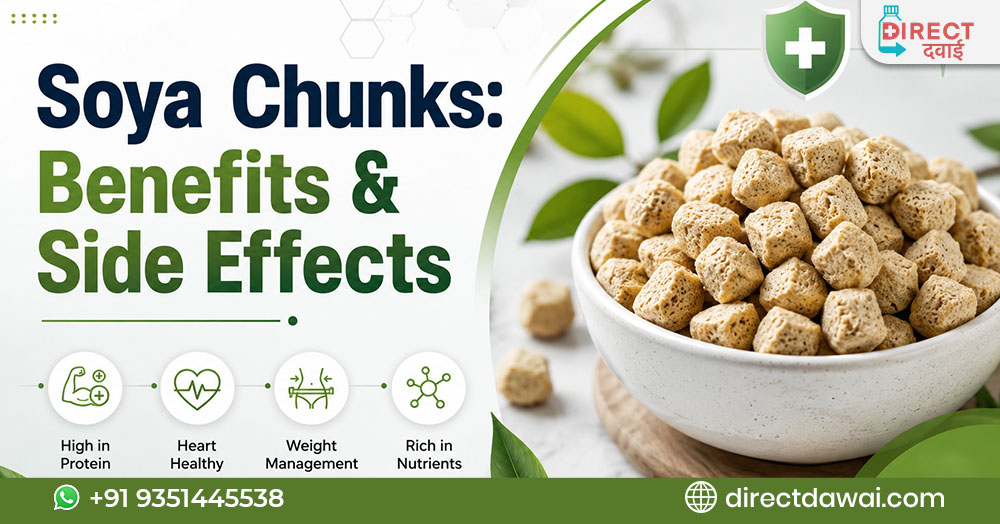
Soya chunks are a textured soy protein food, often called textured vegetable protein or TVP. They are generally made from defatted soy flour, which means much of the soybean's oil has been removed before the flour is processed into a dry, chewy product.
And when you soak or boil them, they absorb water and become soft. But their mild taste also means they easily take on the flavour of curries, pulao, stir-fries and other dishes.
So, yes, they are processed. But "processed" does not automatically mean "junk food". Plain soya chunks can still be a nutrient-dense, protein-rich food. The bigger difference comes from what is added to the product and how you prepare it.
Soya Chunks Protein per 100g - How Much Protein Do They Really Have?
Now, this is probably the first thing most people want to know. Dry soya chunks can provide around 50g of protein per 100g, although the exact amount varies by brand and product. But exactly how much protein and nutrient value will you likely get from it? Let’s look into it.
|
Component |
Nutrient (per 100 g, dry) |
% Daily Value (Approx.) |
|
Energy (Calories) |
345 kcal |
17% |
|
Protein |
52 g |
104% |
|
Carbohydrates |
33 g |
11% |
|
Dietary Fiber |
13 g |
52% |
|
Calcium |
350 mg |
35% |
|
Total Fats |
0.5 g |
1% |
|
Iron |
20 mg |
111% |
|
*Note- These nutrient percentages are based on a standard adult diet of 2,000 calories/day. But daily values can vary depending on your personal health goals and body weight. Also, the important detail is that this refers to the dry weight of soya chunks. But once you soak or boil them, they absorb water and become much heavier. And that does not mean the protein suddenly increases. |
So how much protein is in 50g of soya chunks?
If your particular product contains around 52g protein per 100g dry weight, 50g would provide roughly 26g of protein. And that's why looking at the nutrition label on your specific packet is more reliable than assuming every brand contains exactly the same amount.
Why Are Soya Chunks Popular Among Indians?
There is a simple reason. They offer a lot of protein for relatively little money, are easy to store, and can fit into familiar Indian meals.
They also work well for people who want to increase plant-based protein without completely changing the food they already eat.
You can add them to:
-
Curries
-
Pulao
-
Biryani
-
Stir-fries
-
Wraps
-
Sandwich fillings
-
Salads
-
Mixed vegetable dishes
And because they have a fairly neutral taste, they don't have to become a separate "health food" sitting on your plate. Along with that, they are budget-friendly, offer several necessary nutrients, and are even loved by fitness fans.
In fact, due to their amazing qualities, Indians also call them the flavor chameleons of the kitchen. They become whatever dish you cook them in.
What Are the Benefits of Soya Chunks?
Soya chunks can be a useful food, but it is better to think of their benefits in terms of what they contribute to your overall diet, rather than treating them like a medicine. Like,
High-Quality Plant Protein
One of the biggest reasons people choose soya chunks is their protein content. Soy is considered a high-quality plant protein source and contains all nine essential amino acids.
And protein helps your body with:
-
Muscle maintenance and repair
-
Normal growth and development
-
Recovery after physical activity
-
Keeping you satisfied after meals
For vegetarians and people trying to reduce their dependence on meat, soya chunks can therefore be a practical protein option.
2. May Help With Weight Management
Not just protein, but soya chunks also provide fibre, which can make a meal more filling. That may help you stay satisfied between meals, but remember, soya chunks themselves do not "burn fat" or automatically cause weight loss. Your overall calorie intake, food choices, activity, sleep and consistency still matter. In other words, adding a large serving of soya chunks to an already high-calorie diet will not magically turn it into a weight-loss diet.
3. Low in Fat
Plain dry soya chunks are naturally very low in fat compared with many animal-based protein foods. That makes them useful when you're looking for a protein-rich food without adding a lot of fat to the meal.
However, remember that the final meal can be very different depending on how you cook it. A bowl of boiled soya chunks and vegetables is nutritionally very different from soya chunks cooked in a large amount of oil, cream or butter.
4. Can Support a Heart-Healthy Eating Pattern
Soy foods can fit into a heart-conscious eating pattern, particularly when they replace foods higher in saturated fat. The American Heart Association recommends including healthy plant-based protein sources as part of an overall heart-healthy diet.
However, don't turn this into a claim that soya chunks "cure" high cholesterol or prevent heart disease. Your overall eating pattern matters much more than one food.
5. Provides Fibre and Other Nutrients
Besides protein, soya chunks can also contribute fibre and minerals such as iron and calcium. That combination can make them more nutritionally useful than simply looking at their protein number. Still, they should not replace the variety of foods your body needs. A balanced plate should include vegetables, fruits, whole grains, pulses, dairy or alternatives, nuts, seeds and different protein sources.
Can Soya Chunks Help With Blood Sugar Control?
Soya chunks can even fit into a balanced diet for people managing blood sugar because they provide protein and fibre and are relatively low in simple sugars. But there is an important distinction.
They are not a diabetes treatment, and calling them a "safe diabetic food" without considering the whole meal is too simplistic. For example, the amount of oil, refined carbohydrates, and sugary ingredients in the complete meal can change its overall nutritional impact. So, if you have diabetes, consider your total meal and individual dietary plan rather than judging the food in isolation, along with proper doctor-prescribed medicines.
Also Read: Best Diabetes Medicines in India
Soya Chunks and Women's Health
Soy contains isoflavones, a type of plant compound often described as phytoestrogens. And this is where much of the confusion around soy begins. Phytoestrogens are not the same thing as human estrogen, and eating normal amounts of soy does not mean that your body is suddenly being flooded with estrogen.
In fact, research has investigated soy and isoflavones in areas including menopausal symptoms and bone health. But the evidence is not strong enough to present soya chunks as a treatment for hormonal problems or menopause. So, enjoy them as a food, not as a hormone-balancing medicine.
Also Read: Period Delay Tablets: How They Work, Side Effects & Important Facts
How Much Soya Chunks Can You Eat in a Day?
There is no single "perfect" daily amount of soya chunks that applies to everyone. It’s because your appropriate portion depends on your total diet, protein requirements, calorie needs, digestion, and health conditions.
A practical starting point can be around 25-40g of dry soya chunks in a meal, particularly if you are not used to eating them regularly. In fact, research also describes 25-40g of dry soya chunks as a typical serving and recommends varying protein sources rather than relying on soy alone.
Also, you don't need to make soya chunks your only protein source. Rotate them with dal, beans, chickpeas, dairy, eggs, tofu, nuts, seeds or other suitable protein foods.
Can you eat soya chunks every day?
Now, after knowing the amount of soya chunks you can eat, you would likely want to know: can you eat soya chunks every day? So, here is your answer-
For many healthy adults, eating a moderate amount of plain soy as part of a varied diet can be reasonable. But "more is better" does not apply here. If eating them every day causes bloating, discomfort, or other symptoms, reduce the portion or vary your protein sources. And if you have a soy allergy, certain kidney conditions, or specific medical or medication-related concerns, ask your doctor or dietitian about your individual intake first rather than following self-medication or treatment.
How to Cook Soya Chunks Properly
If soya chunks make you feel bloated, the problem may partly be portion size or preparation rather than the food itself.
Try this simple method:
-
Rinse the dry soya chunks.
-
Soak them in hot water for around 10-20 minutes until soft.
-
Drain and rinse them well.
-
Squeeze out excess water if needed.
-
Cook them thoroughly in your chosen dish.
Starting with a smaller serving can also help if you are new to soy. And if you want to make the meal more balanced, pair soya chunks with vegetables, whole grains or other nutrient-rich foods instead of treating them as the entire meal.
What Could Be The Side Effects of Soya Chunks?
Though soya chunks offer many health benefits, there is no single food that is perfect for everyone. Eating them at a safe, moderate level as part of a balanced diet is always the best way to enjoy their benefits. But while doing so, it is also important for you to know the possible side effects that some people may experience, like
-
Tummy Troubles- Soy is incredibly fibrous, so if you eat a ton of it suddenly, your gut health may take time to adjust, leaving you feeling bloated, gassy, or uncomfortable.
-
Hormonal Shifts- Soy naturally contains plant compounds called phytoestrogens. Now, here, for most people, eating soya chunks in a normal amount is totally fine, but if you eat way too much, your body gets confused by all the mixed signals, and your hormones get messy.
-
Thyroid Interference- It has compounds that can act like a speed bump for your thyroid. If you already deal with a sluggish thyroid, heavy soy intake can make it even harder for it to do its job.
-
Mineral Blockers- They naturally hold antinutrients, such as phytates, that can latch onto essentials like iron and zinc, making it harder for your body to actually absorb them.
-
Kidney Stress- Being a dense protein source, excessive soy can add strain to your kidneys and increase uric acid levels
Apart from the above, soy is among the most common allergens, which, if eaten by mistake, could worsen the situation for a person allergic to it.
Soya Chunks vs Other Protein Sources (Eggs, Paneer, Chicken, Rajma and Tofu)
No single food is the "best" protein source for everyone. The best choice still relies heavily on your diet, budget, health goals, and personal preferences. So, here is the quick comparison to get you through it-
|
Protein Source |
Protein (per 100g) |
Calories |
Fat |
Best For |
|
Dry Soya Chunks |
~52g |
~345 kcal |
~0.5g |
Vegetarians, muscle builders, weight managers, and anyone looking for an affordable, high-protein food. |
|
Chicken Breast |
~31g |
~165 kcal |
~3.6g |
Lean muscle gain, high-quality animal protein, and fitness-focused diets. |
|
Paneer |
~18g |
~265 kcal |
~20g |
Vegetarians looking for protein, calcium, and a filling meal. |
|
Eggs |
~13g |
~143 kcal |
~10g |
Every day nutrition, muscle recovery, and a complete, high-quality protein source. |
|
Rajma (Kidney Beans) |
~24g |
~333 kcal |
~1.2g |
Fibre-rich vegetarian meals, heart-friendly diets, and sustained energy. |
|
Tofu |
~15g |
~144 kcal |
~8g |
People looking for a soft, versatile plant-based protein with lower calories than paneer. |
|
*Note: Be careful when comparing these numbers because dry and cooked foods are not directly comparable. Water changes the weight and therefore changes the protein concentration per 100g. So don't look at the table and conclude that 100g of dry soya chunks is equivalent to 100g of cooked chicken on your plate. |
Soya Chunks - Who Should Be More Careful?
Soya chunks can fit into many diets, but some people should get personalised advice first. So, talk to a doctor or dietitian if you:
-
Have a diagnosed soy allergy
-
Have chronic kidney disease or a medically prescribed protein restriction
-
Take thyroid medication
-
Have persistent digestive symptoms after eating soy
-
Have been advised to follow a specialised diet
-
Are unsure how much protein you actually need
Because this is where a personalised recommendation is much more useful than copying someone else's "daily soya limit" from social media.
Common Myths vs Facts About Soya Chunks
Now that you have read this far, leaving common myths vs facts about Soya Chunks would not be a good choice. Here are some of them which you must know before deciding on whether to take them, in what quantity, and all-
|
Common Myth |
The Scientific Fact |
|
Soy gives men man-boobs (Gynecomastia) |
Soya contains phytoestrogens, which are plant compounds, not human estrogen. You need to take them in a kilo to see that kind of hormonal effect. But having a normal level of consumption is safe. |
|
Soy is an incomplete protein for vegetarians |
Soya is one of the few complete plant-based proteins, containing all 9 required amino acids that your body can't make on its own. |
|
Soy ruins your thyroid and metabolism. |
True for raw soy, but not cooked. Raw soy contains goitrogens, but cooking/boiling nullifies this. If you take thyroid medication, just keep a 3- to 4-hour gap between taking your pill and eating soya. |
|
Soya causes infertility in men and women. |
Extensive human research and randomised controlled trials have shown no connection between normal dietary intake of soy and infertility. |
|
Eating soya causes bloating and gas. |
True for sensitive stomachs. This isn't because soya is inherently bad, but because it is packed with fiber and plant sugars. That’s why consider soaking, boiling, and thoroughly cooking your soya to make it gut-friendly. |
|
Soya chunks are industrially processed junk food. |
It depends on how you buy them. Plain soya chunks are naturally made from defatted soya flour, a lengthy process, but they are highly nutritious. However, commercially pre-packaged masala or flavor-infused varieties can be loaded with sodium and additives. Check those labels! |
Conclusion
Hence, we could say Soya chunks have earned their spot in Indian kitchens because they’re cheap, healthy, and quick to cook. They give you protein, energy, and nutrients without fuss. Of course, no single food can make you healthy on its own, it’s about eating a mix of good foods, staying active, and listening to your body.
If soya chunks fit your lifestyle, they’re a smart and simple addition to your plate. And if not, there are plenty of other protein‑rich foods you can explore. By the way, for those who want trusted protein supplements, health products, or genuine medicines at fair prices, Direct Dawai can be a reliable option for you. They sell healthcare essentials from trusted brands directly to your doorstep, making your health journey smoother and tension-free.
Disclaimer- All the information in this blog is just an educational piece of information. Kindly consult a doctor if you face any issues regarding soya chunk intake or the quantity you should take.
FAQs
-
How much protein is in 100 g of soya chunks?
100 grams of dry soya chunks contain about 52 grams of protein, generally. And that’s a lot. It’s one of the richest plant-based proteins you can eat.
-
Are soya chunks good for weight loss?
Yes, of course, soya chunks are great for weight loss. They’re high in protein, low in fat, and keep you full for longer. It’s just you should not eat them in a high quantity at once.
-
Can diabetics eat soya chunks?
Yes, diabetics can eat soya chunks. They’re low in carbs and don’t spike blood sugar much. It's just remember to eat them in moderation.
-
Can I eat soya chunks protein per 100g daily?
Of course, you can have 50-70g of soya chunks, which is about 25-35g of protein daily. It’s safe for most people when part of a balanced diet.
-
Are soya chunks healthy?
Of course, soya chunks are very healthy. They’re packed with protein, rich in nutrients, and low in fat. Overall, a smart choice for vegetarians.
-
Which is better, soya chunks or eggs?
Both are excellent. Eggs are a complete protein with good fats. Soya chunks are a great plant protein. You can enjoy both or just pick whatever fits your taste and lifestyle best.
Sources
https://www.sebi.gov.in/sebi_data/attachdocs/jun-2026/1780558204915_1257.pdf
https://www.healthifyme.com/blog/nutrition/soya-chunks-nutritional-facts-benefits-and-recipe/


Leave your comment
Note: HTML is not translated!