
Jamun (Java Plum) Benefits, Nutrition, Uses & Side Effects
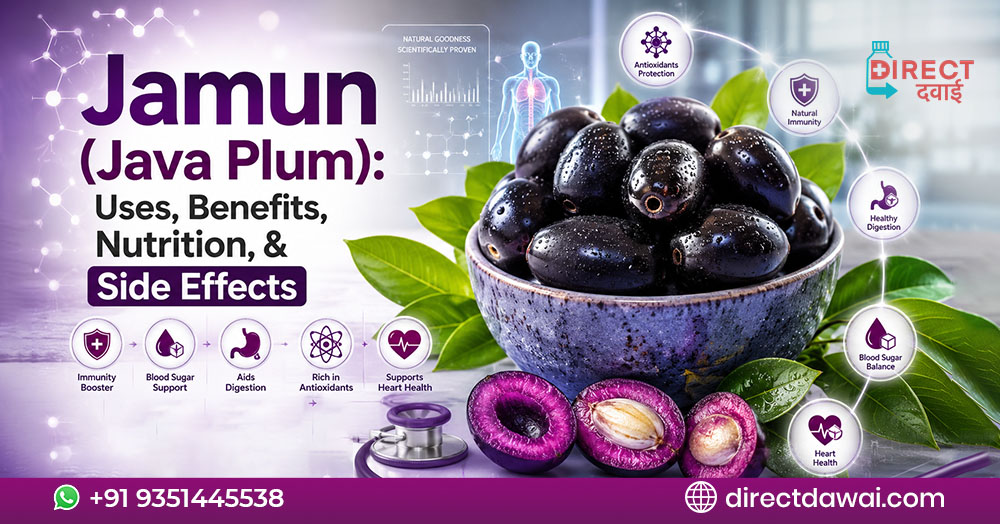
What is Jamun (Java Plum)?
Jamun is a tropical fruit that grows on the jamun tree (*Syzygium cumini*), a species native to India and other parts of South Asia. It is known by different names, such as Java Plum, Indian Blackberry, Black Plum, Jambul, and Rajaman in various regions.
The fruit is small, oval-shaped, and deep purple to almost black when fully ripe. It has a distinctive sweet, mildly sour, and slightly astringent taste that leaves a purple stain on the tongue.
Jamun is a seasonal favorite across India, available during the summer and monsoon months. It is also used to prepare juices, squashes, vinegar, jams, and traditional herbal remedies. The fruit, seeds, leaves, and bark of the jamun tree have all been used in Ayurveda for their potential health-supporting properties.
Quick Facts About Jamun Fruit
|
Common Name |
Jamun (Java Plum) |
|
Scientific Name |
Syzygium cumini |
|
Main Nutrients |
Vitamin C, Fiber, Potassium |
|
Key Benefits |
Blood Sugar Support, Digestion, Immunity |
|
Best Time to Eat |
Mid-morning or Evening |
|
Daily Intake |
100–200 g |
What Makes Jamun a Healthy Fruit?
Jamun contains antioxidants such as anthocyanins, flavonoids, and ellagic acid that help protect cells from oxidative stress. It is also a source of vitamin C, fiber, potassium, and other nutrients that contribute to overall health. These compounds are responsible for many of the well-known jamun benefits and make the fruit a nutritious seasonal choice.
Jamun Nutrition Facts
Jamun is a nutrient-rich fruit that is low in calories and contains several vitamins, minerals, antioxidants, and plant compounds that support overall health. It is particularly known for its vitamin C content, dietary fiber, and antioxidant compounds such as anthocyanins, which give the fruit its deep purple color.
Nutritional Value of Jamun Per 100g
|
Nutrient |
Amount (Approx.) |
|
Energy |
60–75 kcal |
|
Carbohydrates |
14–19 g |
|
Protein |
0.7 g |
|
Fat |
0.2–0.3 g |
|
Dietary Fiber |
0.6–1 g |
|
Calcium |
15–20 mg |
|
Phosphorus |
15–17 mg |
|
Iron |
1–1.5 mg |
|
Magnesium |
15–35 mg |
|
Potassium |
50–80 mg |
|
Vitamin C |
15–20 mg |
|
Folate |
Small amounts |
|
Antioxidants (Anthocyanins) |
Present |
Note: Nutritional values may vary depending on ripeness, growing conditions, and fruit variety.
Top Health Benefits of Jamun Fruit
The major health benefits of jamun include support for healthy blood sugar levels, improved digestion, antioxidant protection, heart health support, immunity support, skin health, and weight management. Here are some of the most important health benefits of jamun fruit:
May Help Support Healthy Blood Sugar Levels
Jamun fruit benefits support healthy blood sugar management. Jamun contains natural compounds such as jamboline and ellagic acid, which may help slow the conversion of starch into sugar. This is why jamun and its seeds have traditionally been used in Ayurveda for people looking to maintain healthy blood sugar levels.
Rich in Antioxidants
Jamun is packed with antioxidants, especially anthocyanins, the pigments responsible for its deep purple color. These antioxidants help protect the body's cells from damage caused by free radicals and oxidative stress, which are linked to aging and various health concerns.
Supports Digestive Health
The fiber present in jamun may help promote healthy digestion and support regular bowel movements. Traditionally, jamun has also been used to manage minor digestive issues and maintain gut health when consumed in moderation.
May Improve Heart Health
Jamun contains nutrients such as potassium and antioxidants that may support cardiovascular health. Potassium helps maintain normal blood pressure levels, while antioxidants may contribute to overall heart wellness by reducing oxidative stress.
Can Help Strengthen Immunity
Vitamin C and other beneficial compounds found in jamun support the normal functioning of the immune system. Regular consumption of vitamin C-rich fruits may help the body defend itself against common infections and illnesses.
Supports Healthy Skin
The antioxidants and vitamin C in jamun may help support healthy skin by protecting skin cells from oxidative damage. These nutrients also play a role in collagen production, which helps maintain skin elasticity and overall skin health.
May Aid Weight Management
Many of the benefits of jamun fruit come from its low-calorie and fiber-rich nutritional profile. Fiber can help increase feelings of fullness, which may reduce unnecessary snacking and support healthy eating habits.
Uses of Jamun in Ayurveda and Traditional Medicine
Jamun has been used in Ayurveda for centuries and is valued for its fruit, seeds, leaves, and bark. Traditional practices use different parts of the jamun tree for various wellness purposes. However, these uses are based on traditional knowledge and should not replace professional medical advice or prescribed treatments.
Jamun Fruit
The ripe fruit is commonly consumed to support digestion and overall health. In Ayurveda, jamun is considered beneficial for balancing certain body functions and is often included in seasonal diets during summer and monsoon months.
Jamun Seeds
Jamun seeds are one of the most widely used parts of the plant in traditional medicine. The seeds are typically dried and ground into a powder that has been traditionally used to support healthy blood sugar levels. Because of this, jamun seed powder remains a popular Ayurvedic remedy.
Jamun Leaves
Jamun leaves have traditionally been used for their antibacterial and astringent properties. In some practices, leaf extracts or decoctions are used to support oral hygiene and maintain healthy gums.
Jamun Bark
The bark of the jamun tree has been used in traditional medicine for its astringent properties. Historically, Ayurvedic practitioners have used bark preparations for digestive health and wellness, as well as for making Ayurvedic medicines.
Modern Perspective on Traditional Uses
Many traditional uses of jamun continue to be studied by researchers. While some findings are promising, more scientific research is needed to fully understand the effectiveness of jamun and its various plant parts. For this reason, jamun should be viewed as a supportive dietary addition rather than a substitute for medical treatment.
How to Eat Jamun Safely and Correctly
Eating jamun the right way can help you enjoy its taste and nutritional benefits while reducing the risk of digestive discomfort. Since jamun is a seasonal fruit, it is best consumed fresh and in moderation as part of a balanced diet.
Best Time to Eat Jamun
Jamun can be eaten as a mid-morning or evening snack. It is generally best consumed between meals rather than immediately after a heavy meal. This allows the body to digest the fruit more comfortably and absorb its nutrients effectively.
How Much Jamun Can You Eat Daily?
There is no fixed amount that suits everyone, but most healthy adults can enjoy around 100–200 grams of fresh jamun in a day during the season. Excessive consumption may lead to digestive issues such as bloating, acidity, or stomach discomfort in some individuals.
Popular Ways to Consume Jamun
You can enjoy jamun in several ways, including:
-
Eating fresh, ripe jamun as a snack
-
Drinking fresh jamun juice without added sugar
-
Adding jamun to fruit salads
-
Using jamun to prepare smoothies
-
Consuming jamun seed powder as advised by a healthcare professional
-
Making homemade jamun vinegar, squash, or preserves
Tips for Safe Consumption
-
Wash jamun thoroughly before eating.
-
Choose ripe and fresh fruits for the best taste and quality.
-
Be cautious with your food intake, particularly if you have a sensitive stomach.
-
People taking diabetes medications should monitor their blood sugar levels and consult a healthcare professional before regularly consuming jamun seed products.
Including jamun in moderation as part of a healthy diet is the best way to enjoy its nutritional value and potential health benefits.
Jamun Side Effects and Precautions
Jamun is generally safe for most people when eaten in moderation. However, like any food, consuming it in excess or under certain conditions may cause unwanted effects. Understanding the possible jamun side effects can help you enjoy the fruit safely.
Low Blood Sugar Risk
Jamun may support healthy blood sugar levels. While this can be beneficial for some individuals, people taking diabetes medications should be cautious. Consuming large amounts of jamun or jamun seed products alongside diabetes medicines may increase the risk of low blood sugar levels.
Digestive Discomfort
Eating too much jamun at one time may lead to digestive issues such as:
-
Bloating
-
Gas
-
Stomach pain
-
Acidity
-
Constipation in some individuals
Moderate consumption is usually well tolerated and less likely to cause these problems.
Possible Allergic Reactions
Although uncommon, some people may experience an allergic reaction after eating jamun. Symptoms may include:
-
Itching
-
Skin rash
-
Swelling of the lips or mouth
-
Digestive discomfort
If you notice any unusual symptoms after consuming jamun, stop eating it and seek medical advice.
Problems Caused by Excess Consumption
Overeating jamun may not provide additional health benefits and can sometimes create discomfort. Excess intake may contribute to digestive disturbances and could affect blood sugar levels in sensitive individuals.
Important Precautions
Keep the following precautions in mind:
-
Eat jamun in moderation as part of a balanced diet.
-
Wash the fruit thoroughly before consumption.
-
Avoid consuming unripe or spoiled fruits.
-
If you have diabetes and take medication, consult your doctor before regularly using jamun seed powder or supplements.
-
Pregnant and breastfeeding women should seek medical advice before using jamun-based herbal preparations.
For most healthy individuals, enjoying fresh jamun in reasonable amounts is safe and can be a nutritious addition to a seasonal diet.
Who Should Avoid Eating Jamun?
While jamun is considered safe for most people, certain individuals should consume it with caution or seek medical advice before making it a regular part of their diet.
People Taking Diabetes Medications
Jamun may help support healthy blood sugar levels. However, people who take insulin or other diabetes medicines should be careful, as consuming large amounts of jamun or jamun seed products may increase the risk of low blood sugar.
Individuals With Fruit Allergies
Although uncommon, some individuals may have an allergy to jamun. Anyone who experiences symptoms such as itching, swelling, rashes, or breathing difficulties after eating the fruit should avoid it and consult a healthcare professional.
People With Sensitive Digestion
Those who frequently experience acidity, bloating, or digestive discomfort may need to limit their intake of jamun, especially when eaten in large quantities.
Pregnant and Breastfeeding Women
Fresh jamun is generally consumed as a seasonal fruit. However, pregnant and breastfeeding women should consult a healthcare professional before using jamun seed powder, herbal preparations, or concentrated supplements.
People Preparing for Surgery
Some experts recommend avoiding excessive consumption of jamun and jamun-based products before a scheduled surgery because of their potential effects on blood sugar levels. It is advisable to discuss dietary concerns with your doctor before any medical procedure.
Final Words
Jamun is a nutritious summer fruit that offers a combination of taste, nutrition, and potential health benefits. Rich in antioxidants, vitamins, minerals, and fiber, it may support healthy blood sugar levels, digestion, immunity, and overall well-being when included as part of a balanced diet.
While jamun is generally safe for most people, it is important to consume it in moderation and be mindful of possible side effects, especially if you have an existing medical condition. Enjoy fresh jamun during the season, and consult a doctor before regularly using jamun-based supplements, or herbal preparations.
Looking for Health and Wellness Products?
The trusted online healthcare store offers a wide range of medicines, supplements, diabetes care products, and healthcare essentials delivered across India. Explore our collection to support your daily health needs.
Disclaimer: The information in this article is for educational purposes only. If you have a medical condition or take regular medications, consult your doctor before consuming jamun regularly.
Frequently Asked Questions (FAQs)
Is jamun good for diabetes?
Jamun may help support healthy blood sugar levels due to the presence of certain plant compounds and dietary fiber. However, it should not be considered a treatment for diabetes. People with diabetes can include jamun in a balanced diet but should continue taking prescribed medications and follow their doctor's advice.
Can I eat jamun every day?
Yes, most healthy adults can eat jamun daily during its season when consumed in moderation. Regular intake may provide antioxidants, vitamins, and minerals that support overall health. However, excessive consumption should be avoided to prevent digestive discomfort.
Is it safe to eat jamun on an empty stomach?
Some people can eat jamun on an empty stomach without any issues, while others may experience acidity or stomach discomfort. If you have a sensitive digestive system, it is generally better to consume jamun between meals rather than on an empty stomach.
How many jamuns should I eat daily?
The ideal amount varies from person to person, but around 100–200 grams of fresh jamun is generally considered a reasonable daily intake for healthy adults. Eating excessive quantities may lead to digestive problems or affect blood sugar levels in sensitive individuals.
Can jamun help with weight loss?
Jamun is naturally low in calories and contains dietary fiber, which may help increase feelings of fullness. While it can be included in a weight-management diet, no single fruit alone can cause weight loss. A balanced diet and regular physical activity remain essential.
Are jamun seeds beneficial?
Jamun seeds have been used in traditional Ayurvedic practices for many years, particularly to support healthy blood sugar levels. However, scientific research is still ongoing, and jamun seed products should not replace prescribed medications or medical treatment.