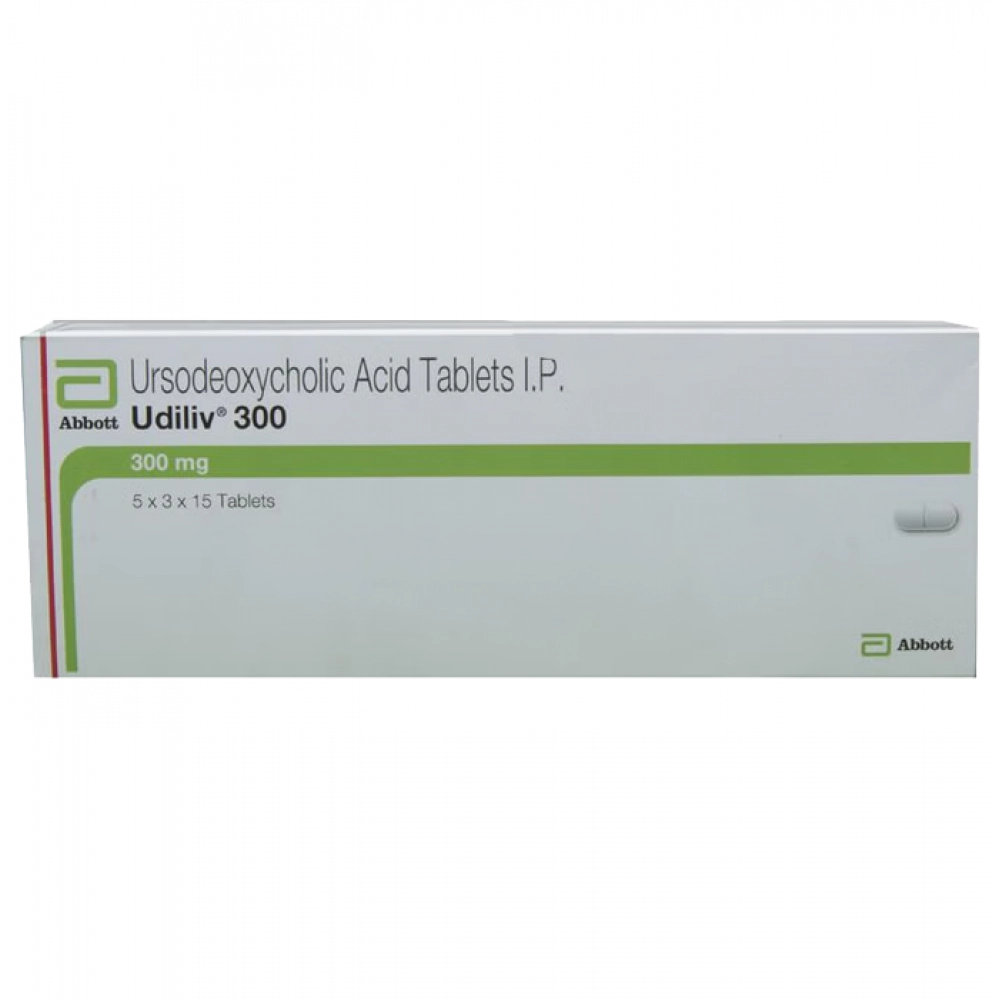
Udiliv 300 Tablet is Abbott’s ursodeoxycholic acid 300 mg. It is a bile acid the body already makes in small amounts. In a higher dose, it thins thick bile and can slowly dissolve certain cholesterol gallstones, if the gallbladder still works and the stones are not hard with calcium. Doctors also use it for primary biliary cholangitis, and in some people with primary sclerosing cholangitis or cystic fibrosis–related liver trouble. It is not a pain tablet for a sudden gallstone attack. Take it with food. It is a prescription medicine.
Key Information
Bile-acid tablet for selected liver and gallstone problems
Contains Ursodeoxycholic acid 300 mg
Used for cholesterol gallstones and primary biliary cholangitis
Also used in some cases of sclerosing cholangitis and cystic fibrosis liver disease
Tablet form (usually a strip of 15)
Take with or after food
Prescription medicine from Abbott
Key Ingredient
Ursodeoxycholic acid (300 mg)
Key Benefits
Helps bile flow more freely
Can slowly shrink the right kind of cholesterol gallstone
Used to slow damage in primary biliary cholangitis
Eases the bile-related itch in some liver conditions, when a doctor chooses it
Taken for months, not for one bad night
Dose is set from body weight and the illness
How Does It Work?
Ursodeoxycholic acid mixes into the bile and makes it less harsh. Cholesterol stays dissolved instead of settling as a stone, and injured bile ducts see less toxic bile. That is why a stone can shrink over many months, and why liver tests in primary biliary cholangitis are watched on this tablet. A stone full of calcium will not melt. A blocked, angry gallbladder still needs urgent care, not another tablet at home.
Directions For Use
Take the dose your doctor sets. Many adults need more than one 300 mg tablet a day.
Swallow it whole with water or a glass of milk, with or after food.
Split the day’s tablets across meals if the doctor has asked you to.
Do not chew it.
If you miss a dose, take it when remembered unless the next one is close. Do not double it.
Keep going for the full months prescribed. Stopping early lets a stone start forming again.
An ultrasound or blood test is how the doctor knows it is working.
Safety Information
Prescription medicine. Do not start it as a general liver tonic.
It will not stop biliary colic. Severe pain, fever, yellow eyes, or vomiting require a doctor the same day.
Tell your doctor about liver disease, a non-functioning gallbladder, or stones that are already calcified.
Diarrhoea means the dose may be high. Do not ignore watery stools that last.
Pregnant or breastfeeding women should use it only if a doctor has decided it is needed.
Mention every other medicine. Some bile-acid binding powders and antacids can reduce how much you absorb.
Keep out of children’s reach.
Store in a cool, dry place, away from sunlight.
Possible Side Effects
FAQs
Q1. What is Udiliv 300 Tablet used for?
Ans. It is used to dissolve certain cholesterol gallstones and to treat primary biliary cholangitis. A doctor may also use it in selected other bile duct and cystic fibrosis liver problems.
Q2. Is Udiliv 300 a prescription medicine?
Ans. Yes. It is a prescription medicine from Abbott. Do not take it because a scan mentioned stones. The type of stone and a working gallbladder decide if it can help.
Q3. How long until a gallstone goes?
Ans. Months, often six or more, and only if the stone is the cholesterol kind. Some stones never dissolve and need surgery. Do not stop early because one week felt fine.
Q4. Why take it with food or milk?
Ans. Food and milk help the bile acids mix and sit better in the stomach. Take Udiliv with or after a meal, not on an empty stomach in the middle of the night.
Q5. Can I use it for sudden gallstone pain?
Ans. No. Sudden severe pain, fever, or yellow eyes are an emergency, not a cue for an extra tablet. Udiliv works slowly. Get medical care the same day.
Q6. How should Udiliv 300 tablets be stored?
Ans. Keep the strip in a cool, dry place, away from moisture and sunlight. Store it out of children’s reach and use it before the expiry date.