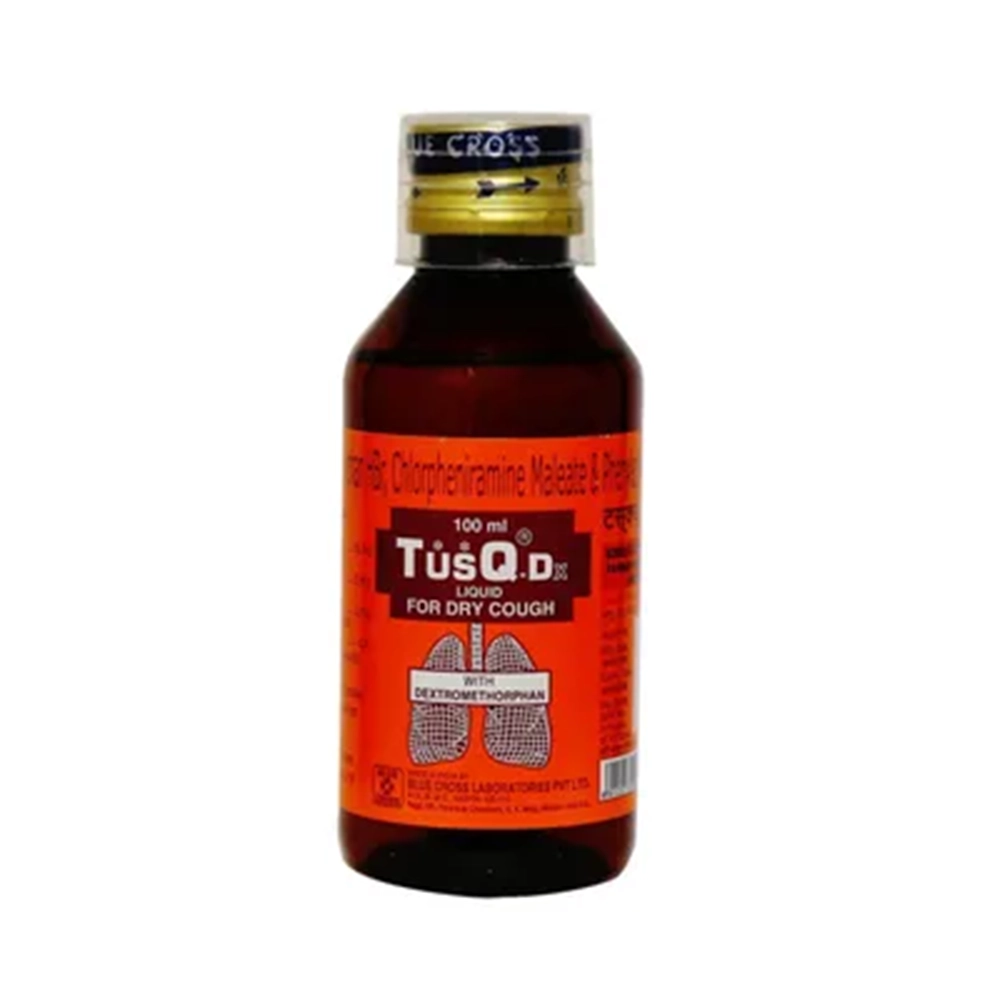
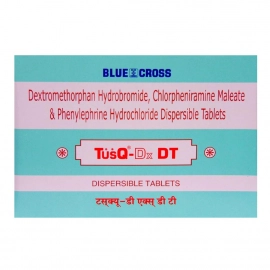
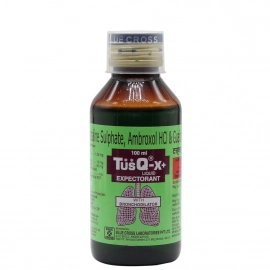
TusQ DX Syrup is a sugar-free cough and cold syrup from Blue Cross. Each 5 ml has dextromethorphan 15 mg, chlorpheniramine 2 mg, and phenylephrine 5 mg. Dextromethorphan holds back a dry, tickly cough. Chlorpheniramine calms sneezing, a runny nose, and watery eyes. Phenylephrine opens a blocked nose. Because it has no sugar, it is easier to use when someone has diabetes, if the doctor agrees. Shake the bottle and measure the dose. Do not use it for a wet cough with mucus, and do not give it to children under four years.
Key Information
Sugar-free syrup for dry cough and common cold
Each 5 ml has Dextromethorphan 15 mg, Chlorpheniramine 2 mg, and Phenylephrine 5 mg
Calms cough, sneezing, and nasal blockage
Not for cough that brings up mucus
Syrup form (usually 100 ml bottle)
For oral use
Prescription medicine from Blue Cross
Key Ingredient
Dextromethorphan Hydrobromide (15 mg/5 ml), Chlorpheniramine Maleate (2 mg/5 ml), Phenylephrine (5 mg/5 ml)
Key Benefits
Settles a dry cough that scratches the throat
Cuts sneezing, watery eyes, and a runny nose
Eases a stuffy nose so air moves more freely
Sugar-free, so it does not add a sugar load
One measured dose covers cold symptoms together
Works better when you also drink enough fluids
How Does It Work?
Dextromethorphan turns down the cough centre in the brain, so a dry cough fires less often. Chlorpheniramine blocks histamine, which is why allergy-type cold symptoms ease, and it can make you sleepy. Phenylephrine tightens small vessels inside the nose. Less swelling means less blockage. None of these salts loosen mucus, so a wet cough needs a different syrup.
Directions For Use
Take only the dose your doctor sets.
Shake the bottle well before each use.
Measure with the cup or spoon given with the pack, not a kitchen spoon.
It may be taken with or without food.
Drink extra water to soothe the throat.
Do not use it for a cough with phlegm.
If a dose is missed, take it when remembered unless the next dose is close. Do not double it.
Safety Information
Not for children below four years.
Sleepiness is common. Do not drive or use machines until you feel alert.
Avoid alcohol and other sedating medicines unless the doctor agrees.
Do not combine with MAO inhibitor antidepressants or extra cough and cold products.
Tell your doctor if you have high blood pressure, heart disease, glaucoma, prostate trouble, thyroid disease, diabetes, or kidney or liver problems.
Sugar-free does not mean the dose can be increased.
Stop and seek care for palpitations, severe headache, rash, face swelling, or trouble breathing.
See a doctor if the cough lasts more than a week or comes with fever.
Pregnant or breastfeeding women should use it only if a doctor advises it.
Keep out of children’s reach.
Store below 30°C, away from sunlight. Close the cap tightly.
Possible Side Effects
Drowsiness or dizziness
Dry mouth
Nausea or stomach upset
Headache
Restlessness or trouble sleeping
Fast heartbeat (uncommon)
Rare blurred vision or confusion
FAQs
Q1. What is TusQ DX Syrup used for?
Ans. It is a sugar-free syrup for a dry cough and common cold. It calms the cough, eases sneezing and a runny nose, and helps with a blocked nose.
Q2. Can I use it if I am coughing up phlegm?
Ans. No. Dextromethorphan suppresses the cough. If mucus needs to come out, this syrup can hold it in. Ask for a medicine meant for a wet cough.
Q3. Is the sugar-free syrup safe in diabetes?
Ans. It does not add sugar, which helps, but phenylephrine and the dose still need a doctor’s say. Do not treat it as a free extra dose.
Q4. Why is the syrup stronger than the DT tablet?
Ans. Each 5 ml of syrup has dextromethorphan 15 mg. The DT tablet has 10 mg. Do not swap one for the other without checking the dose with your doctor.
Q5. Can a toddler take TusQ DX Syrup?
Ans. Not under four years of age. For an older child, use only the amount a doctor has written. Never pour a dose by guess.
Q6. How should TusQ DX Syrup be stored?
Ans. Keep the bottle tightly closed below 30°C, away from sunlight and moisture. Store it out of children’s reach and use it before the expiry date.