
Azithromycin - Uses, Dosage, Side Effects & Composition Guide
What is Azithromycin?
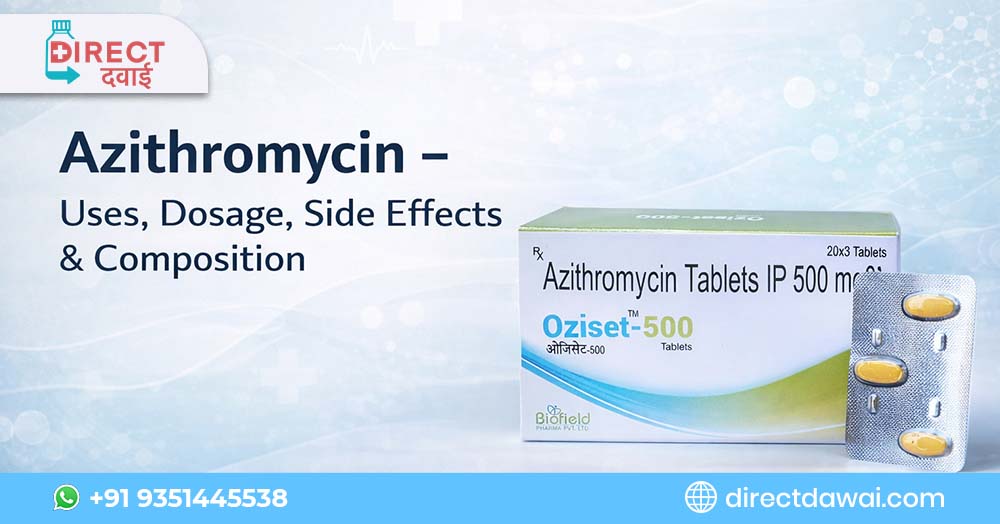
Azithromycin is an antibiotic medicine that helps treat infections caused by bacteria. It belongs to a group of antibiotics called macrolides. This medicine is commonly available in different forms such as tablets, capsules, and oral suspension.
Doctors prescribe Azithromycin to fight infections in various parts of the body, especially the respiratory tract, skin, ears, and some sexually transmitted infections. It is widely used because it is effective, usually requires a short treatment duration, and is generally well-tolerated when taken as directed.
What is Azithromycin used for?
Azithromycin is used to treat different types of bacterial infections in the body. It helps stop the growth of bacteria and clears the infection over time.
Doctors commonly prescribe Azithromycin for:
-
Respiratory infections such as throat infections, sinusitis, bronchitis, and pneumonia
-
Ear infections (especially in children)
-
Skin and soft tissue infections
-
Eye infections like conjunctivitis (in some cases)
-
Sexually transmitted infections (STIs) such as chlamydia
It is important to understand that Azithromycin works only against bacterial infections. It does not treat viral illnesses like cold, flu, or COVID-19. Always take it as prescribed by your doctor to get the best results and avoid antibiotic resistance.
What conditions does Azithromycin treat?
Azithromycin is used to treat several bacterial infections throughout the body. It is commonly prescribed when infections are caused by bacteria that are sensitive to this antibiotic.
Below are the conditions it helps with:
-
Upper respiratory tract infections
Such as sore throat, tonsillitis, and sinus infections.
-
Lower respiratory tract infections
Includes bronchitis and pneumonia, where the lungs are affected.
-
Ear infections (Otitis media)
Often seen in children, causing ear pain and discomfort.
-
Skin and soft tissue infections
Like infected wounds, boils, or minor skin infections.
-
Sexually transmitted infections (STIs)
Especially used for treating chlamydia and certain other bacterial STIs.
-
Certain eye infections
In some cases, it may be used for bacterial eye infections.
Azithromycin is usually prescribed for short courses, but it is important to complete the full dose as advised to fully clear the infection and prevent resistance.
Can Azithromycin treat my condition?
Azithromycin can treat your condition only if it is caused by bacteria that respond to this antibiotic. Doctors usually prescribe it after evaluating your symptoms, medical history, and sometimes test results.
It may help if you have:
-
Bacterial throat or chest infection
-
Sinus or ear infection
-
Skin infection
-
Certain sexually transmitted infections
However, Azithromycin will not work for:
-
Viral infections like cold or flu
-
Fever caused by a viral illness
-
Body pain without infection
If you are unsure whether your condition needs Azithromycin, it’s best to consult a doctor instead of self-medicating. Taking antibiotics unnecessarily can reduce their effectiveness in the future.
Is Azithromycin used for fever or pain?
Azithromycin is not directly used to treat fever or pain. It is an antibiotic, which means its main role is to fight bacterial infections.
However, if your fever is caused by a bacterial infection, Azithromycin may help reduce the fever indirectly by treating the underlying cause. Once the infection starts improving, symptoms like fever and discomfort usually go down.
For pain relief or fever control, doctors may prescribe other medicines such as Paracetamol alongside Azithromycin.
In short:
-
Not a painkiller
-
Not a fever medicine
-
Helps only if the fever is due to a bacterial infection
Always avoid using Azithromycin on your own for simple fever or body pain without medical advice.
This medicine is available to buy at a lower price at an online pharmacy store that delivers medicine to your doorstep.
Composition of Azithromycin
The main active ingredient in Azithromycin medicine is Azithromycin itself. It is a macrolide antibiotic that helps fight bacterial infections.
Azithromycin is available in different forms and strengths, such as:
-
Tablets (commonly 250 mg and 500 mg)
-
Capsules
-
Oral suspension (liquid form for children)
-
Injections (used in hospitals)
Along with the active ingredient, the medicine also contains inactive ingredients (excipients) that help in forming the tablet or syrup, improving stability, and making it easier to consume.
The exact composition may vary slightly depending on the brand, but the key working component remains Azithromycin.
How does Azithromycin work?
-
Azithromycin is an antibiotic that stops the growth of bacteria in the body.
-
It works by blocking protein production inside bacterial cells.
-
Without these proteins, bacteria cannot grow or multiply.
-
This helps your immune system kill the remaining bacteria and clear the infection.
-
It is effective for infections of the throat, lungs, skin, and ears.
-
Always complete the full course even if you start feeling better, to avoid resistance.
Recommended Dosage of Azithromycin
The dosage of Azithromycin depends on your age, condition, and type of infection. It is usually taken once daily.
General Dosage Guidelines
|
Category |
Recommended Dosage |
|
Adults |
500 mg once daily for 3 days OR 500 mg on Day 1, followed by 250 mg once daily for the next 4 days |
|
Children |
Dose is based on body weight; usually given as oral suspension (syrup) |
|
STIs (e.g., chlamydia) |
A single higher dose may be prescribed by the doctor |
How to Take Azithromycin
Refer to the table below on how to take Azithromycin tablet:
|
Instruction |
Details |
|
Timing |
To be taken at same time everyday |
|
With/Without Food |
Can be taken with or without food |
|
Syrup Use |
Shake well before use |
Important: Always follow your doctor’s advice. Do not change the dose or stop early, even if you feel better, as it may lead to incomplete treatment and antibiotic resistance.
What if I miss a dose?
If you miss a dose of Azithromycin, take it as soon as you remember it. If your next dose is soon, skip the missed one and continue as usual.
Do not take a double dose to make up for the missed one, as this may increase the risk of side effects.
Since Azithromycin is usually prescribed for a short duration, missing doses can reduce its effectiveness. Try to take it at the same time every day to maintain the right level of medicine in your body and get the best results.
Side Effects of Azithromycin
Like all medicines, Azithromycin may cause some side effects, although not everyone experiences them. Most side effects are mild and go away once the treatment is completed.
Common side effects:
-
Nausea
-
Vomiting
-
Diarrhea
-
Stomach pain or discomfort
-
Headache
Less common but serious side effects:
-
Allergic reactions (rash, itching, swelling)
-
Severe diarrhea (may indicate intestinal infection)
-
Liver problems (yellowing of skin or eyes)
-
Irregular heartbeat or palpitations
If you experience mild symptoms, they usually improve on their own. However, if you notice any severe or unusual symptoms, seek medical help immediately.
To manage mild symptoms like fever or discomfort, doctors may sometimes suggest medicines such as Paracetamol, if appropriate.
Always inform your doctor about any side effects you experience during the treatment.
Also Read: Paracetamol Uses, Dosage, Precautions, Side Effects
Drug Interactions
Azithromycin can interact with certain medicines and may affect how they work or increase the risk of side effects. That’s why it’s important to inform your doctor about all the medicines, supplements, or herbal products you are taking.
Common drug interactions include:
-
Antacids (for acidity)
Medicines containing aluminum or magnesium can reduce the absorption of Azithromycin. It is usually advised to take them at different times.
-
Blood thinners
Medicines like Warfarin may increase the risk of bleeding when taken with Azithromycin.
-
Heart rhythm medicines
Drugs such as Amiodarone may increase the risk of irregular heartbeat when combined.
-
Other antibiotics or medicines affecting liver enzymes
These may change how Azithromycin is processed in the body.
Important tip:
Always share your full medication history with your doctor to avoid harmful interactions. Do not start or stop any medicine without medical advice while taking Azithromycin.
Warnings & Precautions
Before taking Azithromycin, it’s important to be aware of certain precautions to ensure safe use.
Inform your doctor if you have:
-
Liver problems
-
Kidney disease
-
Heart conditions, especially irregular heartbeat
-
History of allergic reactions to antibiotics
Important precautions:
-
Allergy risk: Avoid Azithromycin if you are allergic to macrolide antibiotics.
-
Heart rhythm issues: It may increase the risk of abnormal heart rhythm in some people.
-
Liver health: Use with caution if you have existing liver problems.
-
Pregnancy & breastfeeding: Take only if prescribed by a doctor after proper evaluation.
General advice:
-
Do not self-medicate or reuse old prescriptions
-
Complete the full course strictly
-
Avoid unnecessary use to prevent antibiotic resistance
If you notice symptoms like severe rash, breathing difficulty, or yellowing of eyes/skin, seek medical help immediately.
Frequently Asked Questions (FAQs)
Q1. Can I take Azithromycin with food?
Ans. Yes, Azithromycin can be taken with or without food. Taking it after food can help soothe your stomach and make you feel more comfortable.
Q2. How long does Azithromycin take to work?
Ans. You may start feeling better within 1 to 2 days, but it is important to complete the full course to fully clear the infection.
Q3. Can I stop taking Azithromycin once I feel better?
Ans. No, you should not stop early. Stopping medicine early can cause infection return and antibiotic resistance.
Q4. Is Azithromycin safe during pregnancy?
Ans. It should be used during pregnancy only if prescribed by a doctor after evaluating the benefits and risks.
Q5. Can I drink alcohol while taking Azithromycin?
Ans. There is no strong interaction, but it is better to avoid alcohol as it may worsen side effects like stomach upset.
Q6. Can Azithromycin treat cold or flu?
Ans. No, Azithromycin does not work for viral infections like cold or flu. It is only effective against bacterial infections.
Q7. Can I take Azithromycin for throat infection?
Ans. Yes, it may be prescribed for bacterial throat infections, but only after a doctor confirms the cause.
Reference: